Earnings Call Transcription: A Workflow for Analysts
How analysts and IR teams turn earnings call audio into searchable transcripts, and the workflow steps that hold up under earnings-week deadlines.
MacWhisper Review: Local Whisper on Mac, Honestly Tested
We ran a week of messy interview audio through MacWhisper. Here's what the Mac-native Whisper app does well, where it stumbles, and who should buy it.
Speak AI Alternatives: 6 Tools for Qualitative Research
Most qualitative researchers don't actually use Speak AI's analysis layer. Six alternatives — NVivo, Dovetail, Sonix, Otter, MAXQDA, VTS — compared honestly.
Captioning Style Guides: 8 Standards Worth Bookmarking
Eight public caption and subtitle style guides — Netflix, BBC, DCMP, WCAG, FCC, OFCOM, NCAM, 3Play — with what each covers and when to use it.
Why Your AI Transcript Says [INAUDIBLE]: 7 Causes and Fixes
[INAUDIBLE] usually means the audio failed before the AI did. The seven situations that produce these markers in real recordings, with the fix for each.
Adobe Premiere Speech to Text Review: Is It Accurate?
Premiere has Speech to Text built in and free with your subscription. Is it accurate enough to ship? An honest review based on real client footage.
The Workplace Investigation Transcript Checklist for HR
A defensible HR investigation transcript needs consent on tape, named speakers, verbatim text, and chain of custody. The complete checklist.
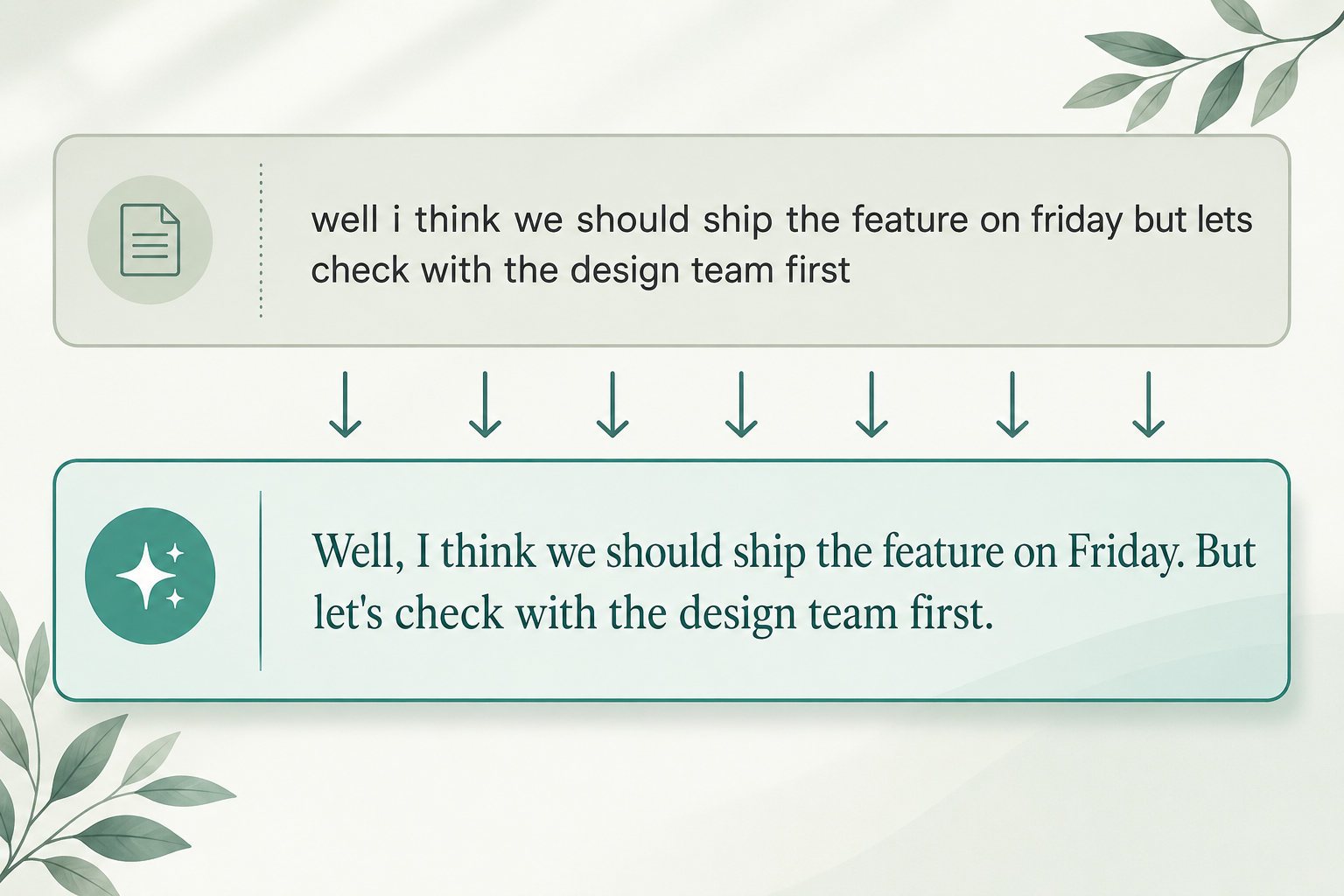
What Is Punctuation Restoration in AI Transcripts?
Speech recognition models transcribe words. Punctuation is added by a separate model. Here's how punctuation restoration works and where it goes wrong.
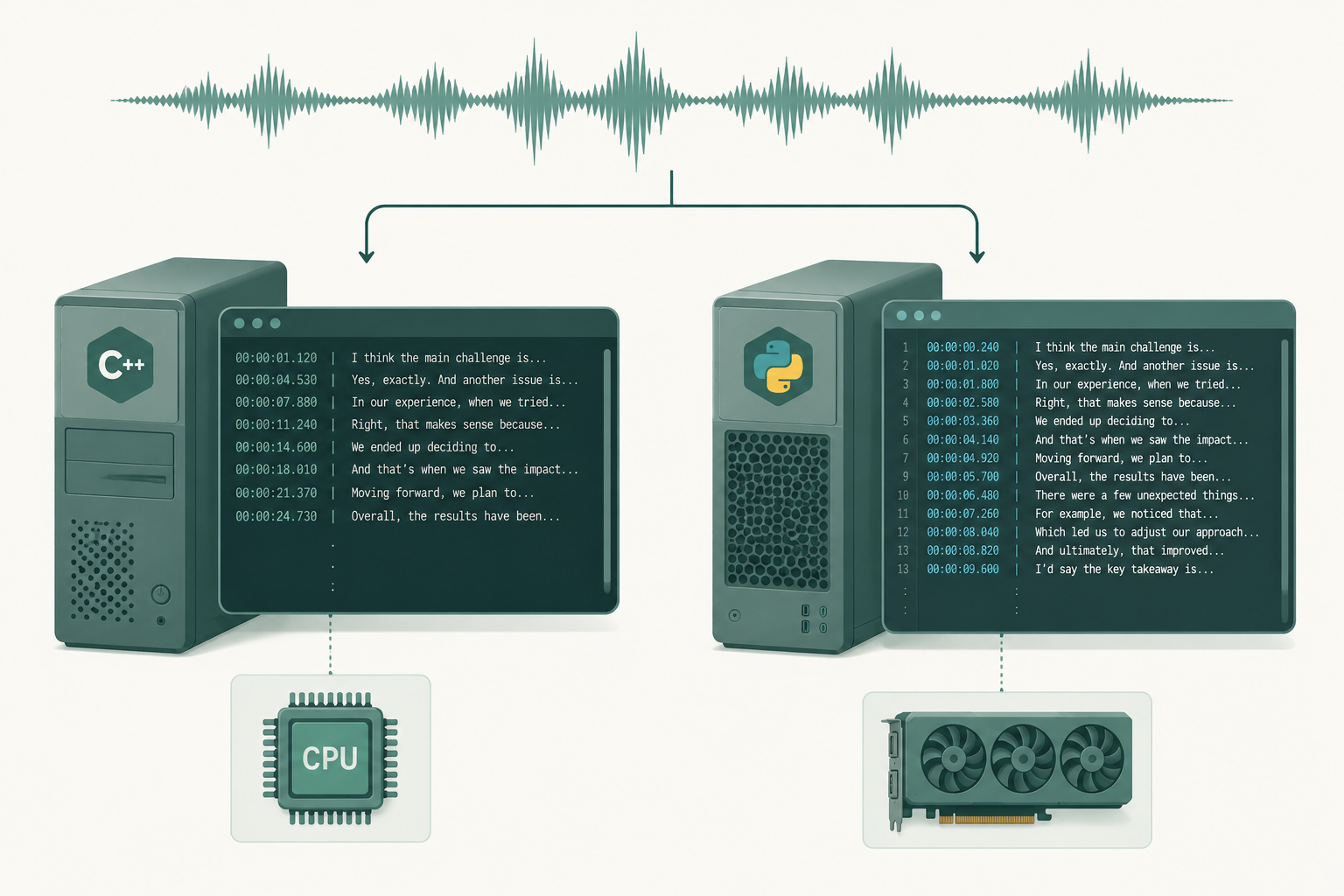
Whisper.cpp vs faster-whisper: Which Local Engine Wins?
Whisper.cpp and faster-whisper both run OpenAI Whisper locally. We break down speed, hardware, accuracy, and setup so you can pick the right one.
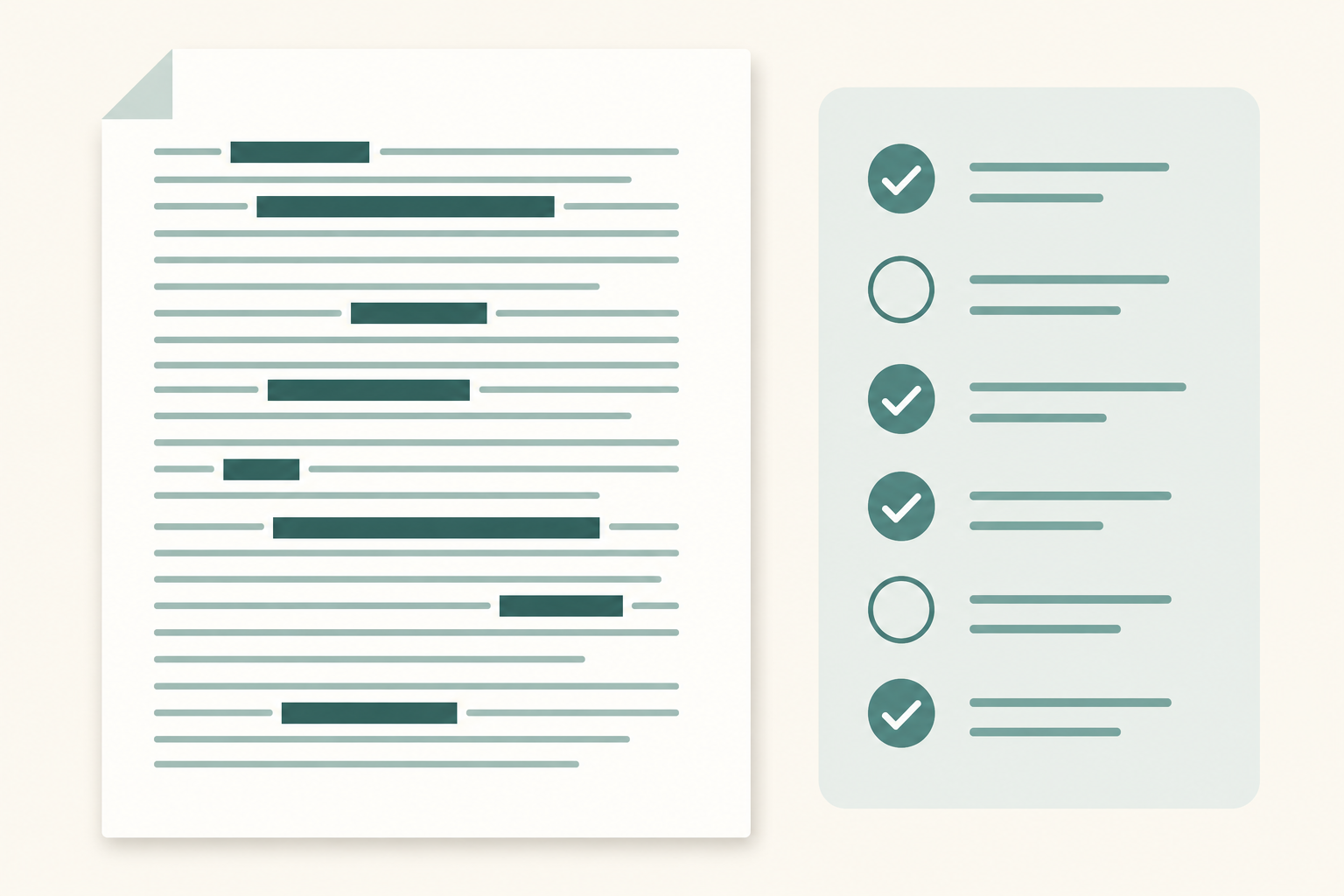
The Transcript Redaction Checklist: PII Before Sharing
The 26-item checklist for stripping names, addresses, IDs, and other identifiers from a transcript before you share it — without breaking the analysis.
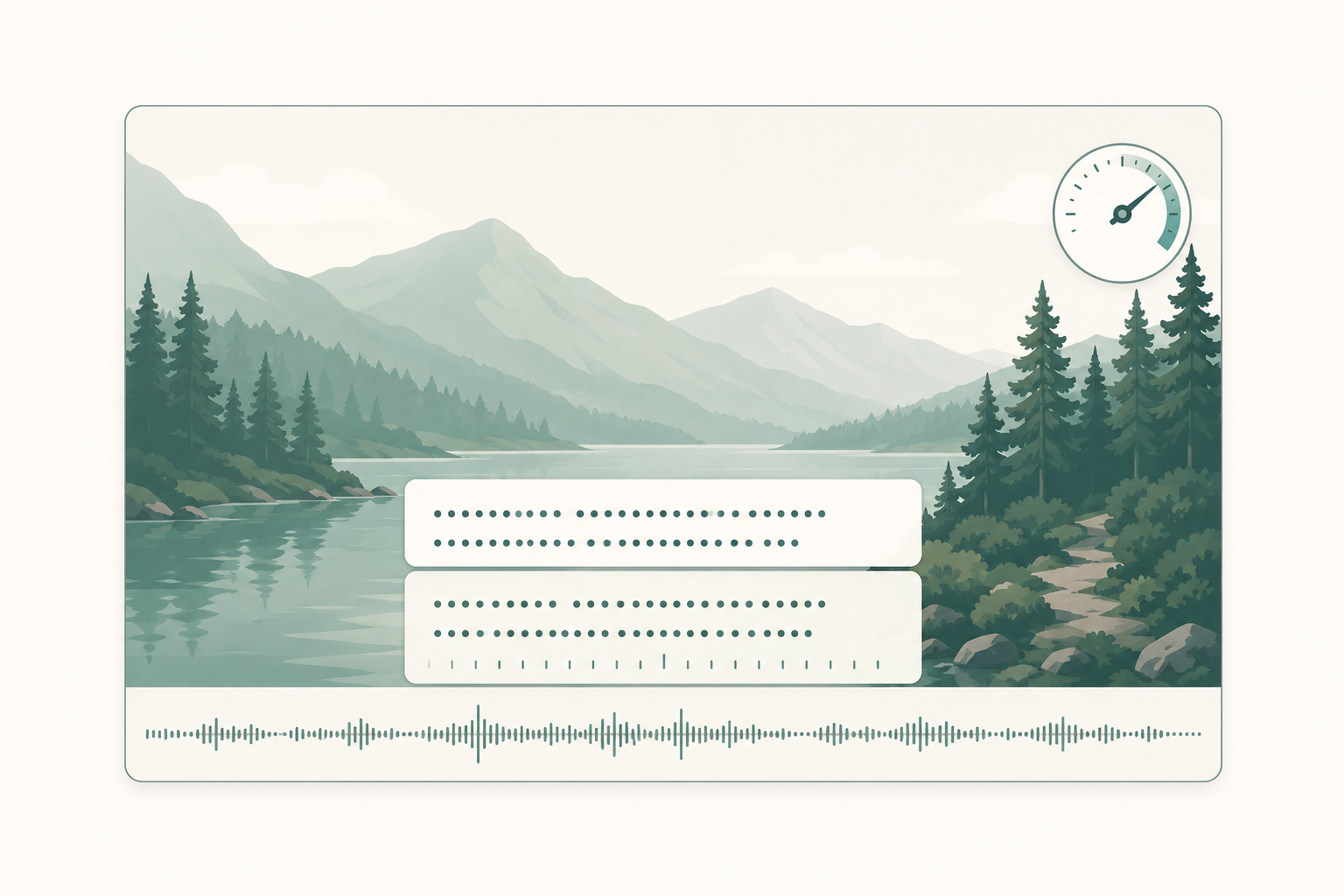
Subtitle Reading Speed Checklist: CPS and WPM Limits
Subtitle reading speed targets, line-length rules, and a pre-publish checklist for captioners — with CPS and WPM limits from BBC and Netflix style guides.
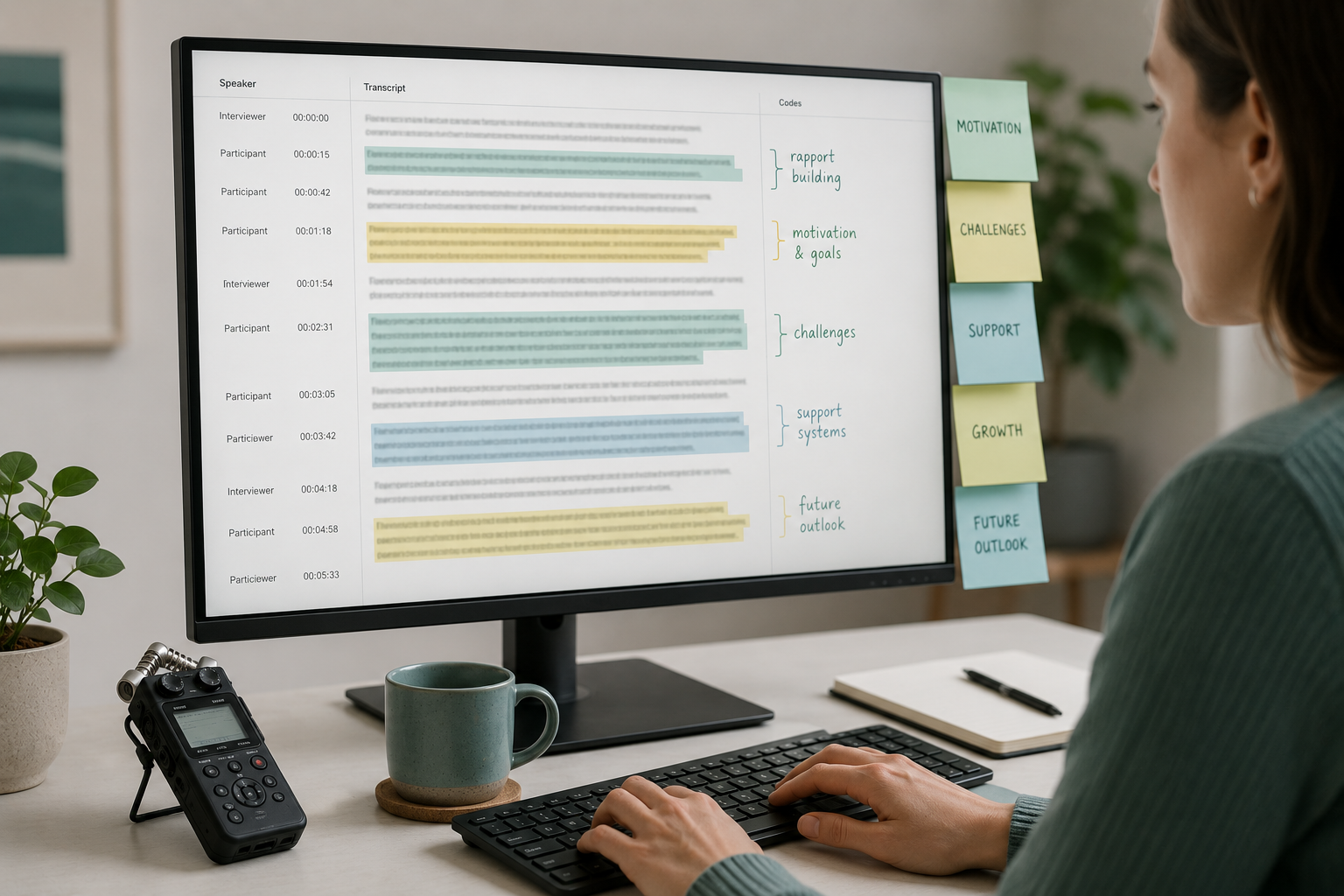
NVivo Transcript Coding for Qualitative Researchers
What qualitative researchers need to do before importing transcripts to NVivo: speaker labels, auto-code, and the mistakes that cost a weekend.
Descript Pricing in 2026: Plans, Limits, Hidden Costs
Descript runs $0 to $50+ per editor monthly. Here's what each tier actually costs, the transcription hour caps, and where the bill quietly grows.
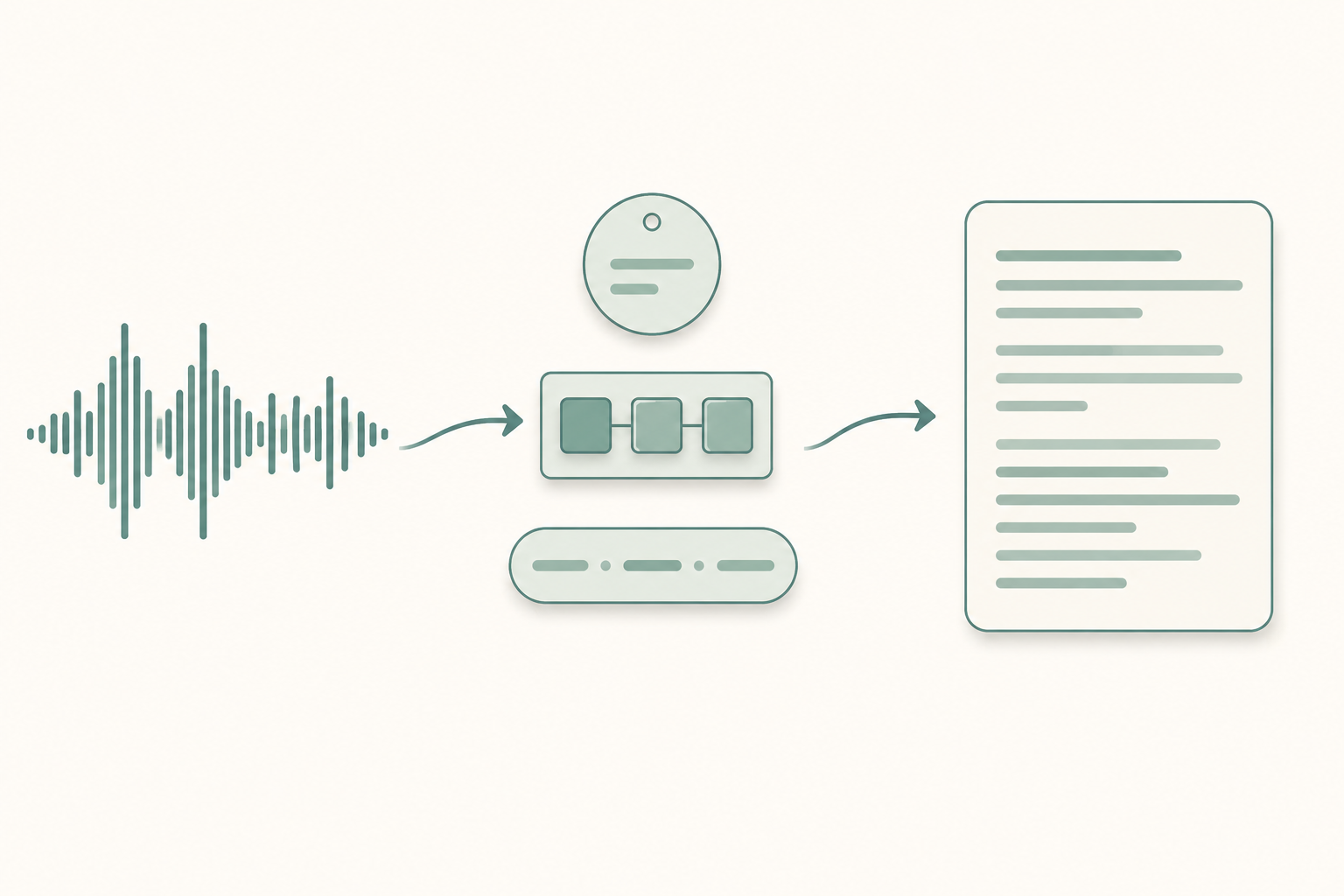
Custom Vocabulary List for Transcription (Free Template)
The custom vocabulary template that fixes proper nouns in AI transcripts. Copy-paste lists for medical, legal, tech, and brand-heavy audio.
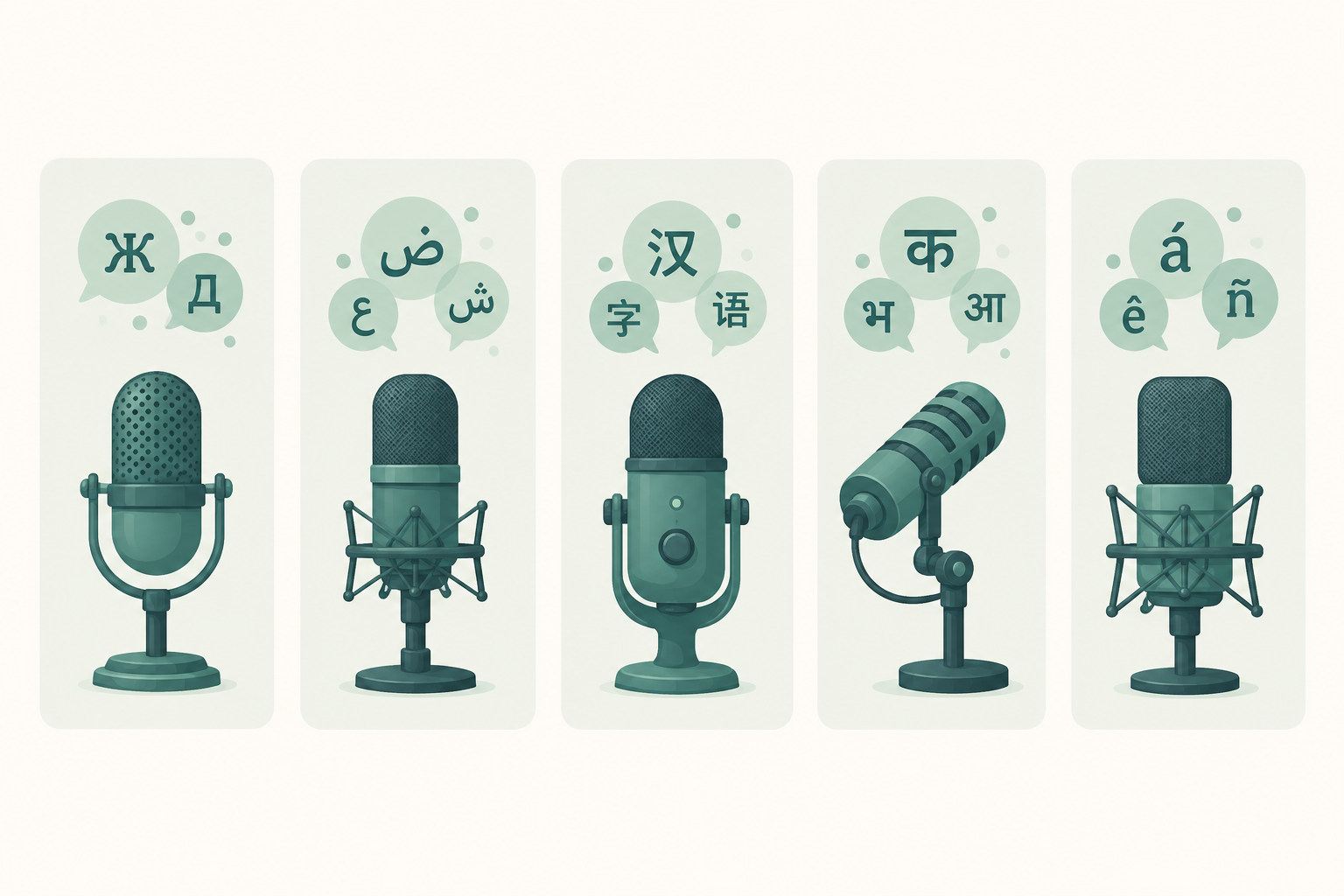
Happy Scribe Alternatives: 5 Multilingual Tools Compared
Five honest Happy Scribe alternatives for multilingual transcription. Sonix, Trint, Maestra, AssemblyAI, VTS — who each fits, pricing, language coverage.
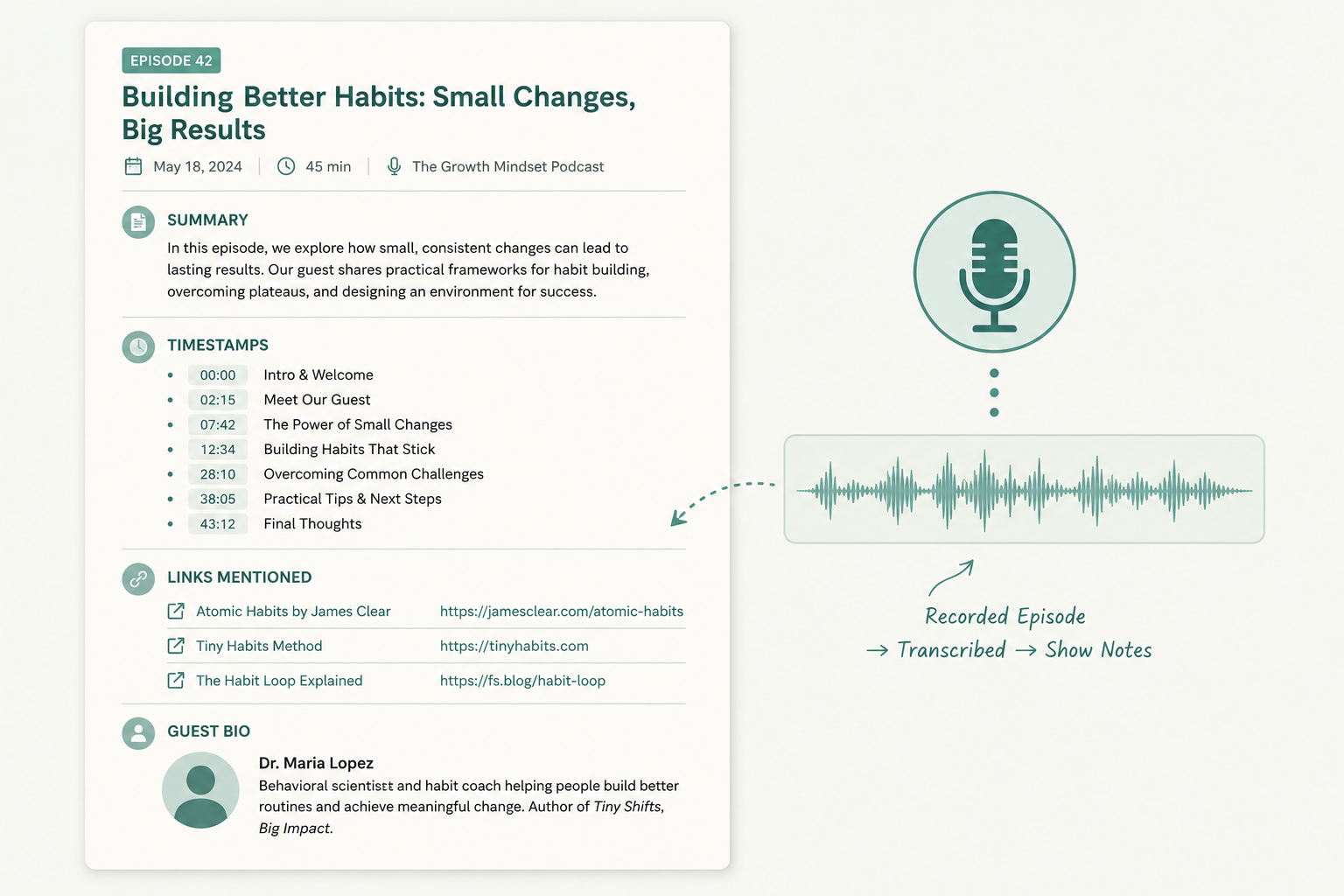
Podcast Show Notes Template: From Transcript to Notes
A copy-paste podcast show notes template built from your episode transcript, with a filled example and quick fill-in guidance for every show.
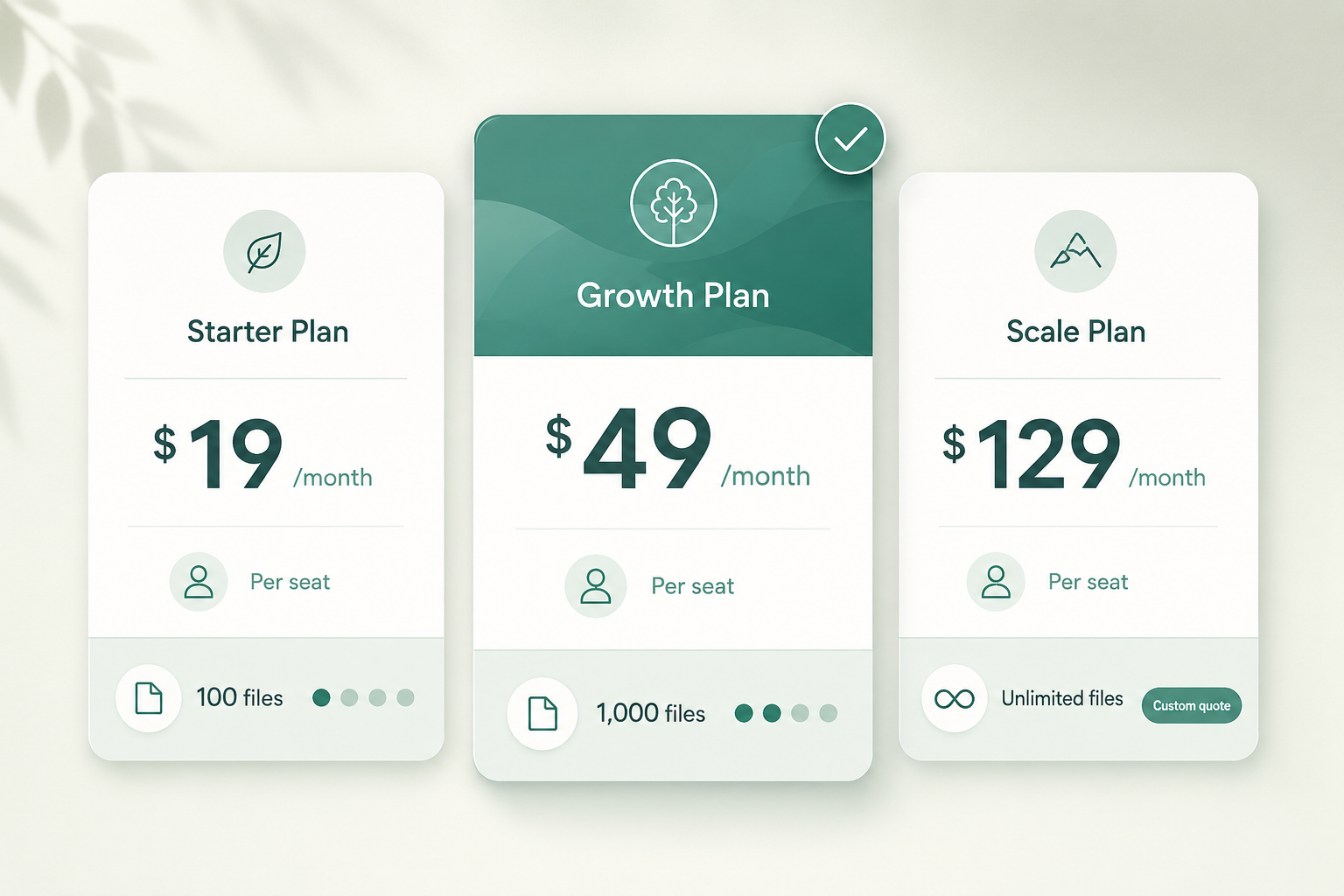
Trint Pricing in 2026: Plans, Per-Hour Rates, and Limits
Trint Starter runs about $80/month per seat for 7 files; Advanced is ~$100/month unlimited. Honest breakdown of plans, hidden costs, and who it's right for.
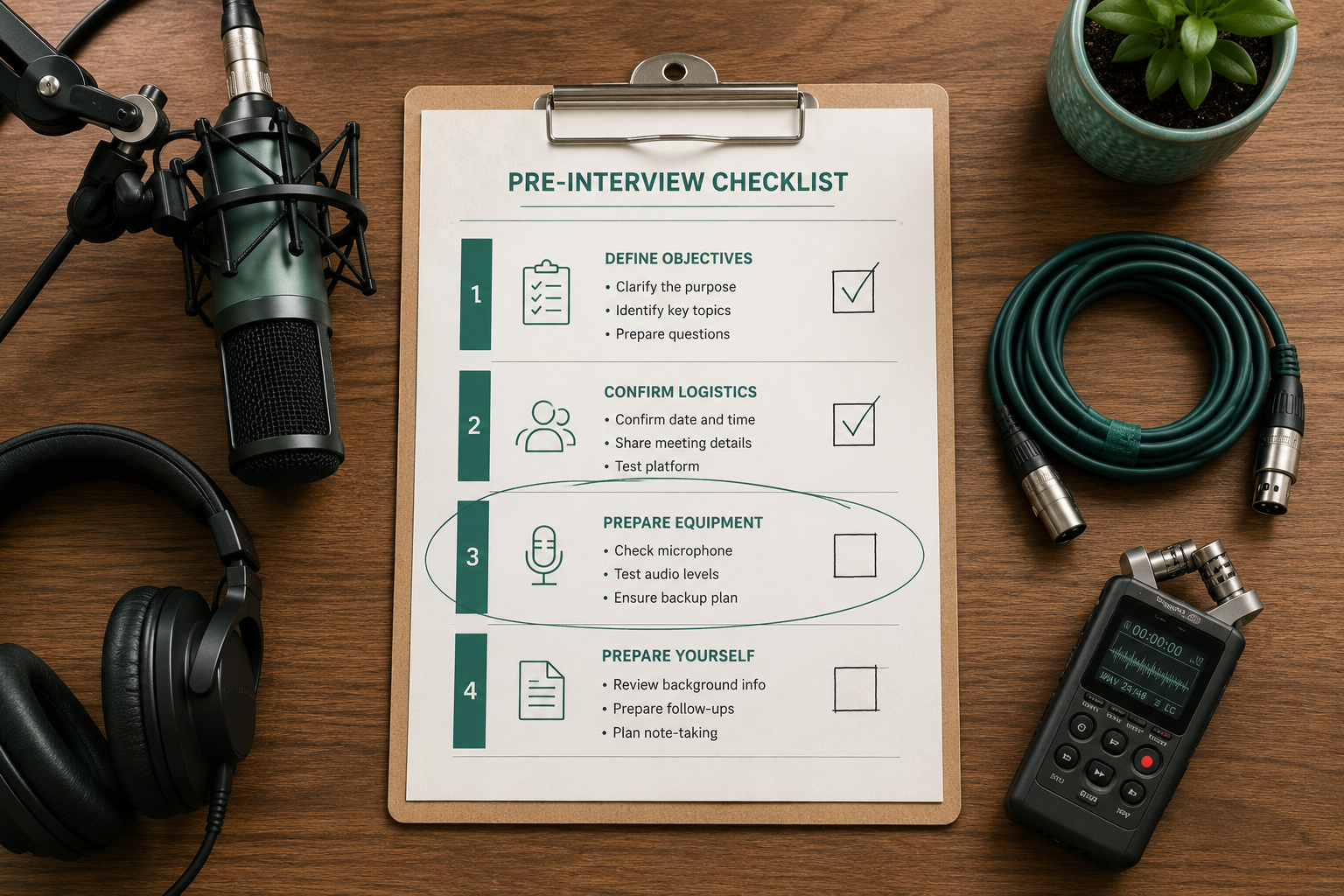
The Interview Recording Checklist for Clean Transcripts
The 10-minute interview audio checklist that gets you clean, accurate transcripts the first time — mic, room, recording settings, and the opening 30 seconds.
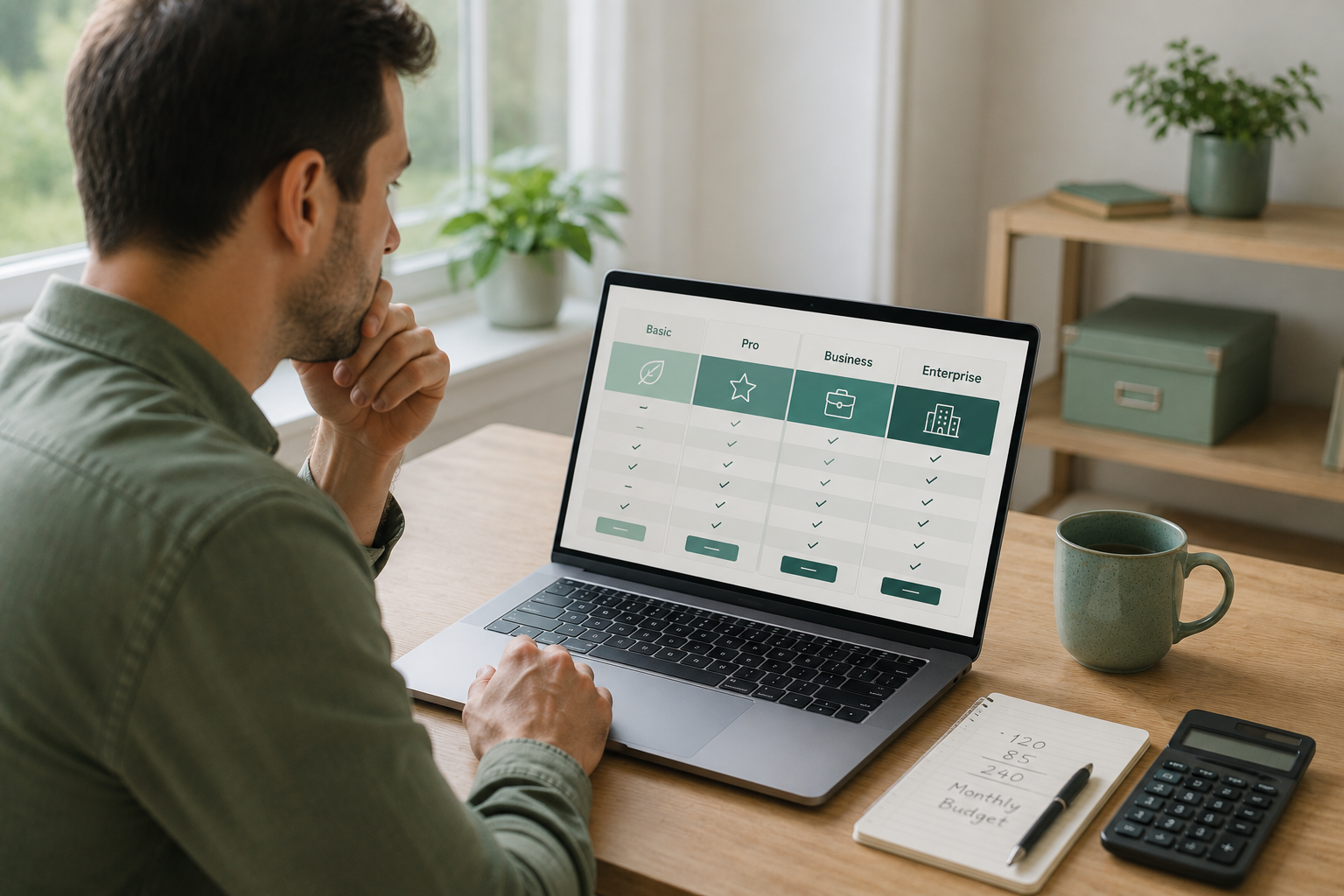
Sonix Pricing in 2026: Plans, Per-Hour Rates, Limits
Sonix charges $5-$10 per audio hour depending on the plan. Real per-hour costs, what's included, and cheaper alternatives if you're paying too much.
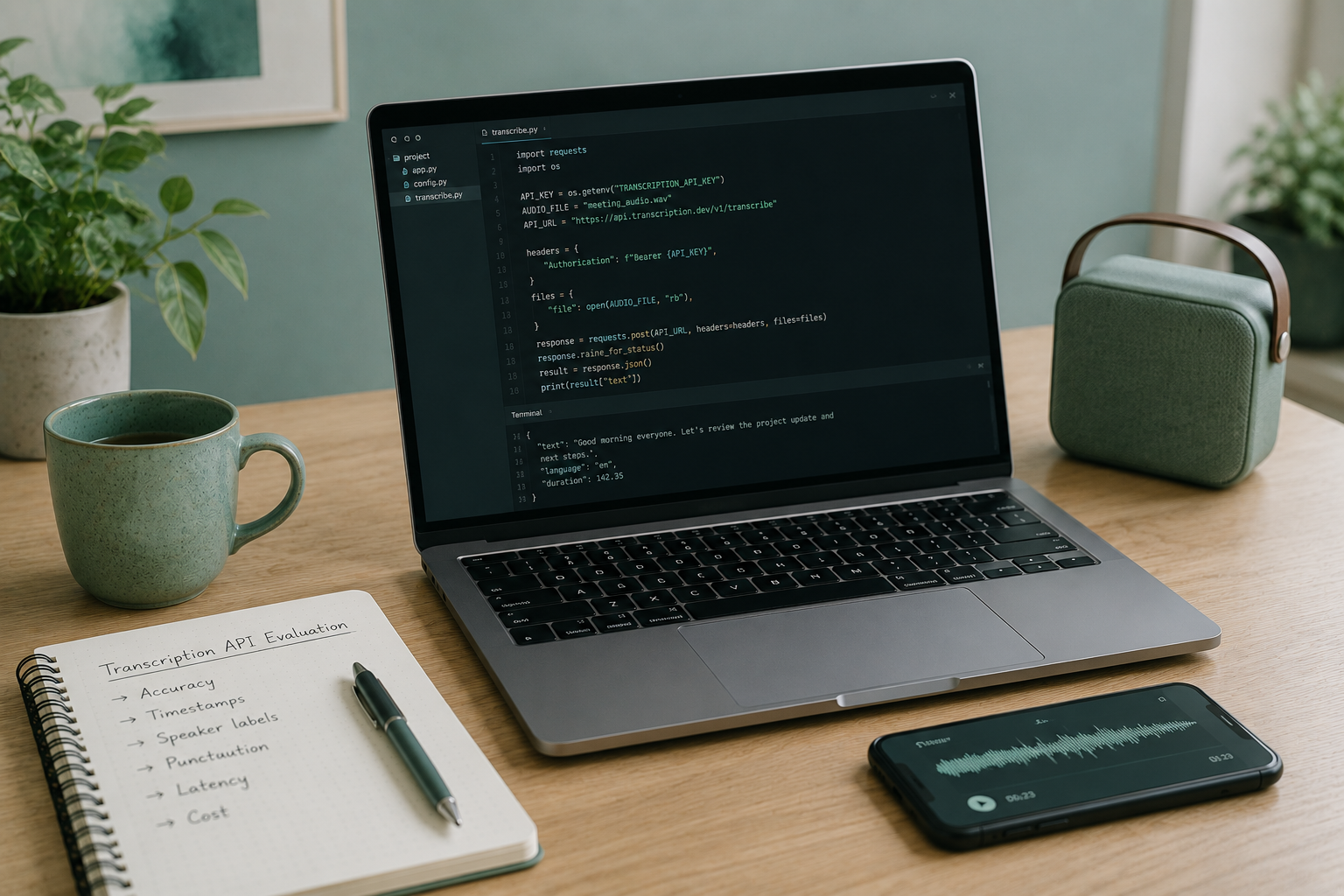
AssemblyAI Review: Pricing, Accuracy, and Real Limits
AssemblyAI is a strong speech-to-text API for developers building real products. Here's where it shines, where it stumbles, and what it costs.
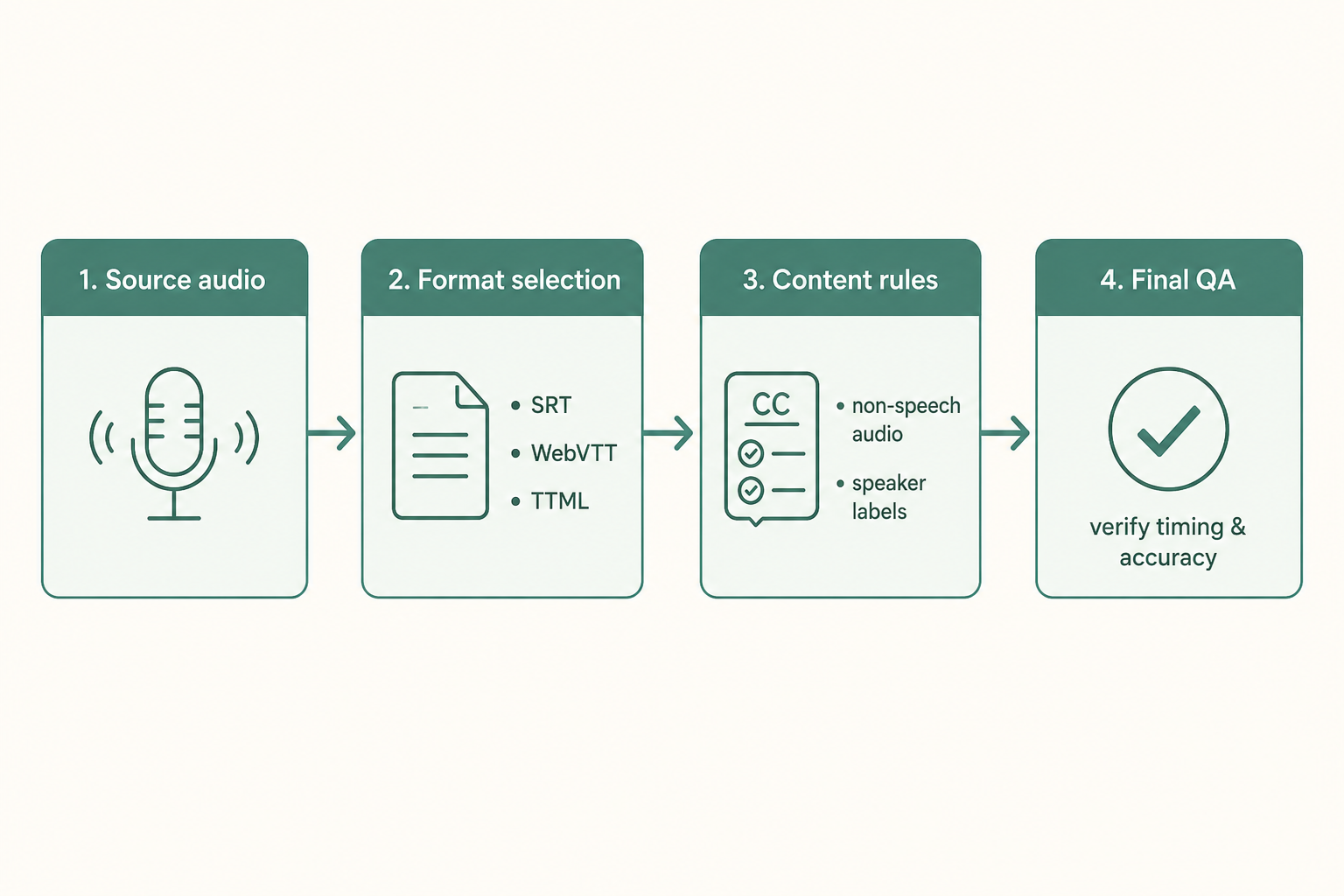
The WCAG Captions Checklist for Compliant Online Video
The WCAG captions checklist before you publish: file formats, content rules, accuracy thresholds, and the QA pass that catches what auto-captions miss.
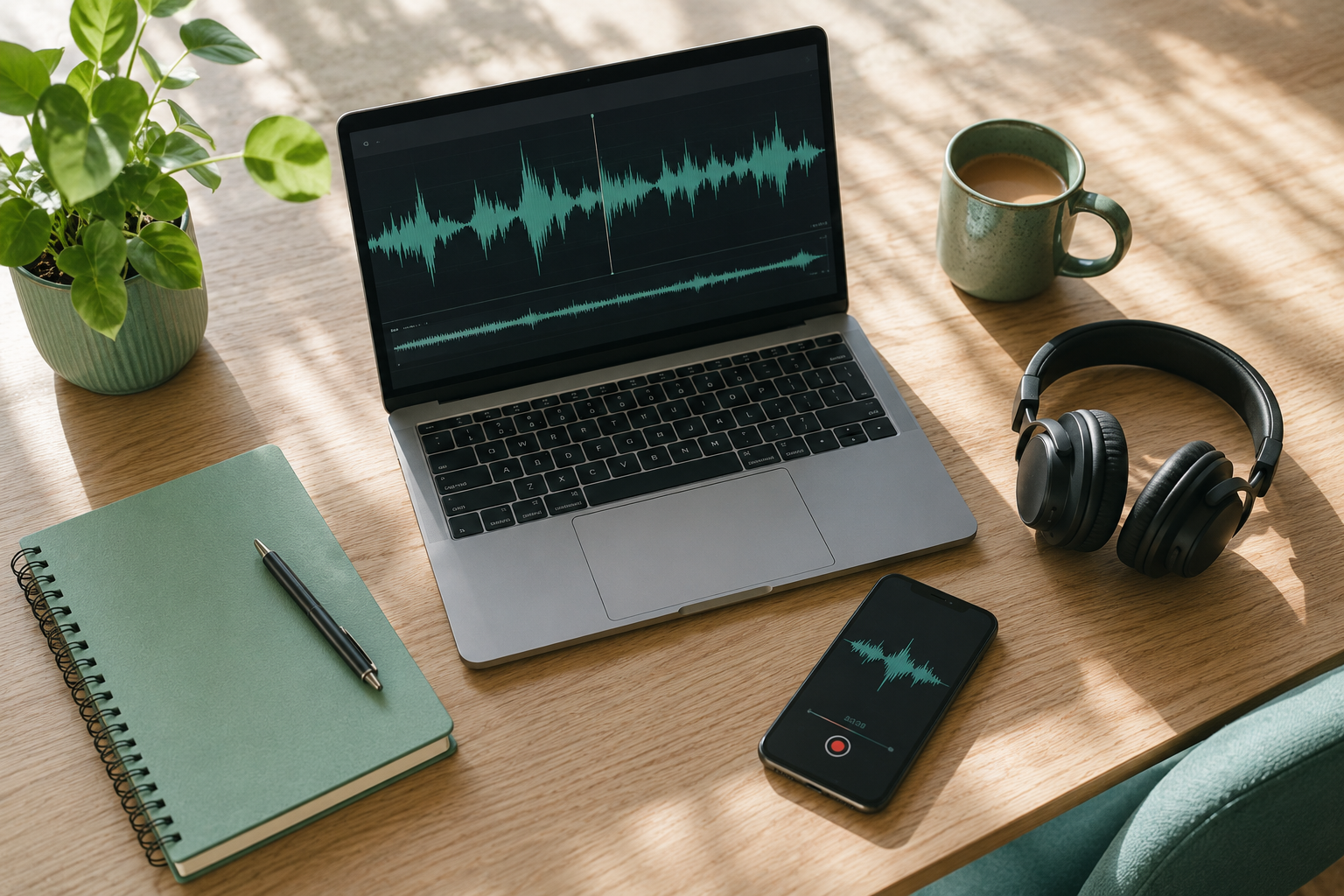
Descript Alternatives: 6 Tools if You Only Need Transcripts
Need transcripts but not a full video editor? Six honest Descript alternatives that cost less per hour, export cleaner, and skip the studio bloat.
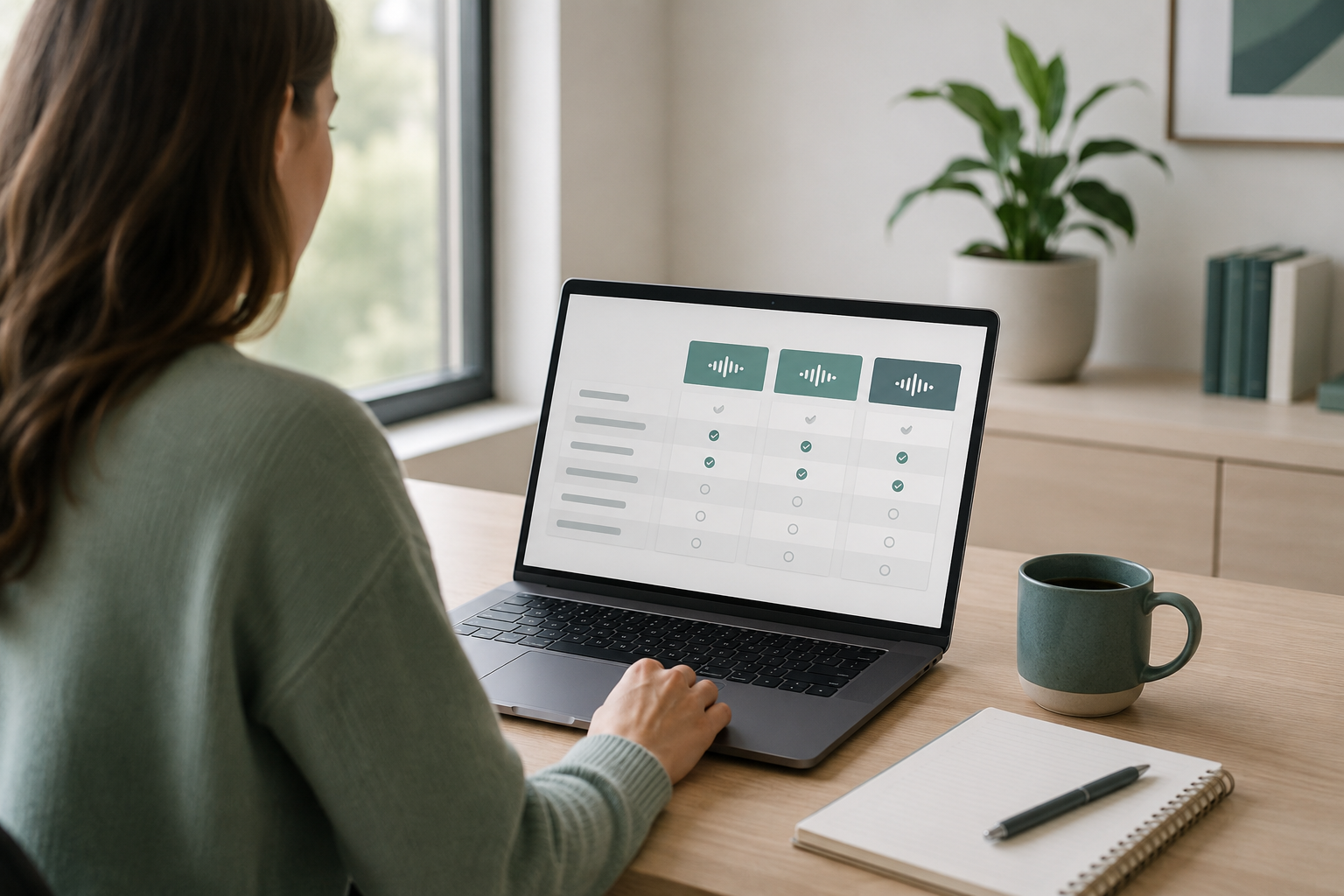
Trint Alternatives: 6 Cheaper Transcription Tools
Trint is solid software, but at $60+ a month it adds up fast. Here are six cheaper transcription tools for researchers, journalists, and podcasters.

Free Interview Transcript Template (Copy-Paste Ready)
A free interview transcript template you can paste into Docs or Word, with a filled example and tips for researchers, journalists, and podcasters.
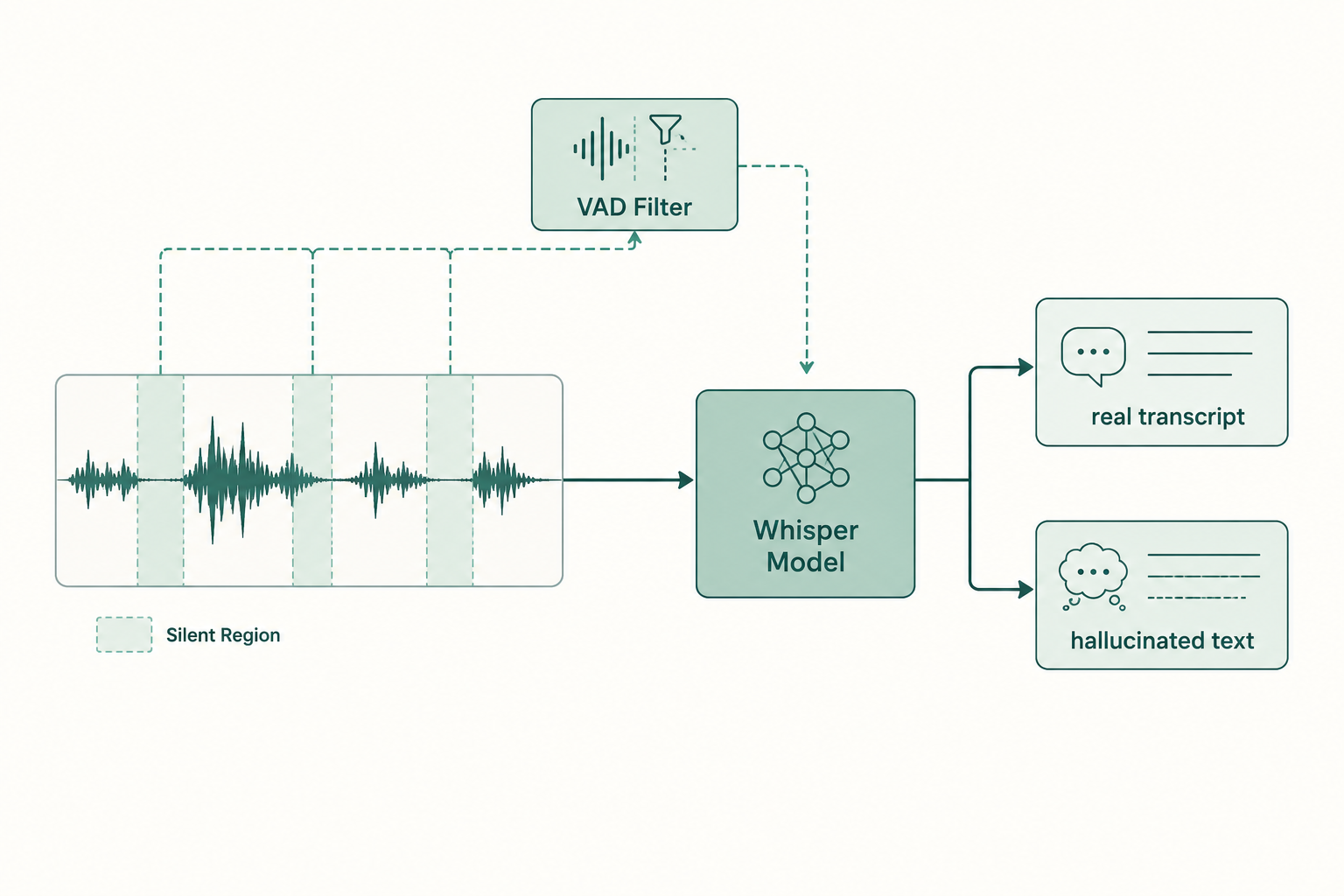
Whisper Hallucinations: Why They Happen and How to Fix Them
Whisper invents sentences during silent or noisy audio. The causes are well-known and the fixes are tunable. Here's the order to try them in.
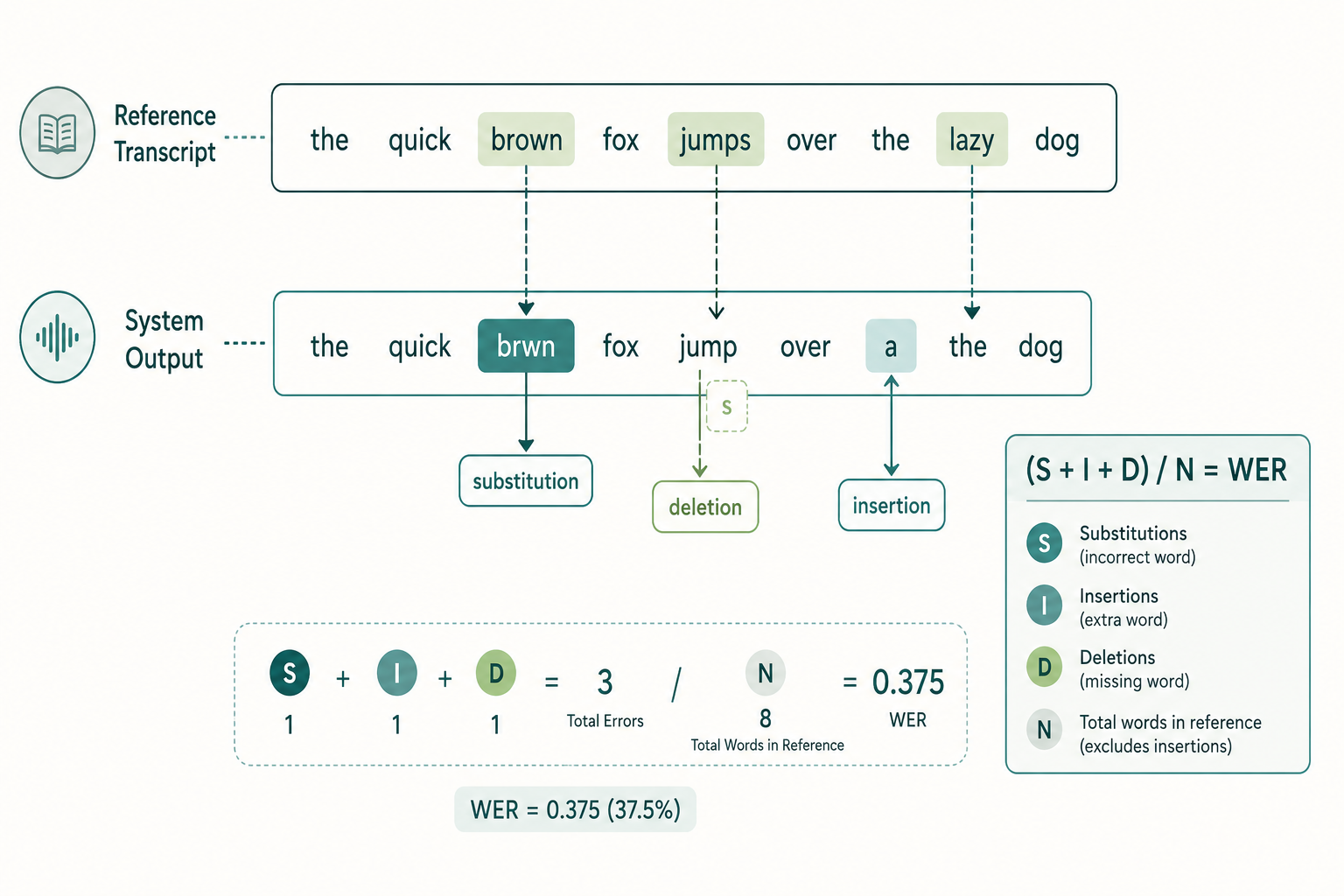
What Is Word Error Rate (WER)? Speech-to-Text Accuracy
Word error rate is the standard speech-to-text accuracy metric. What it actually measures, what counts as a good score, and where the number lies to you.
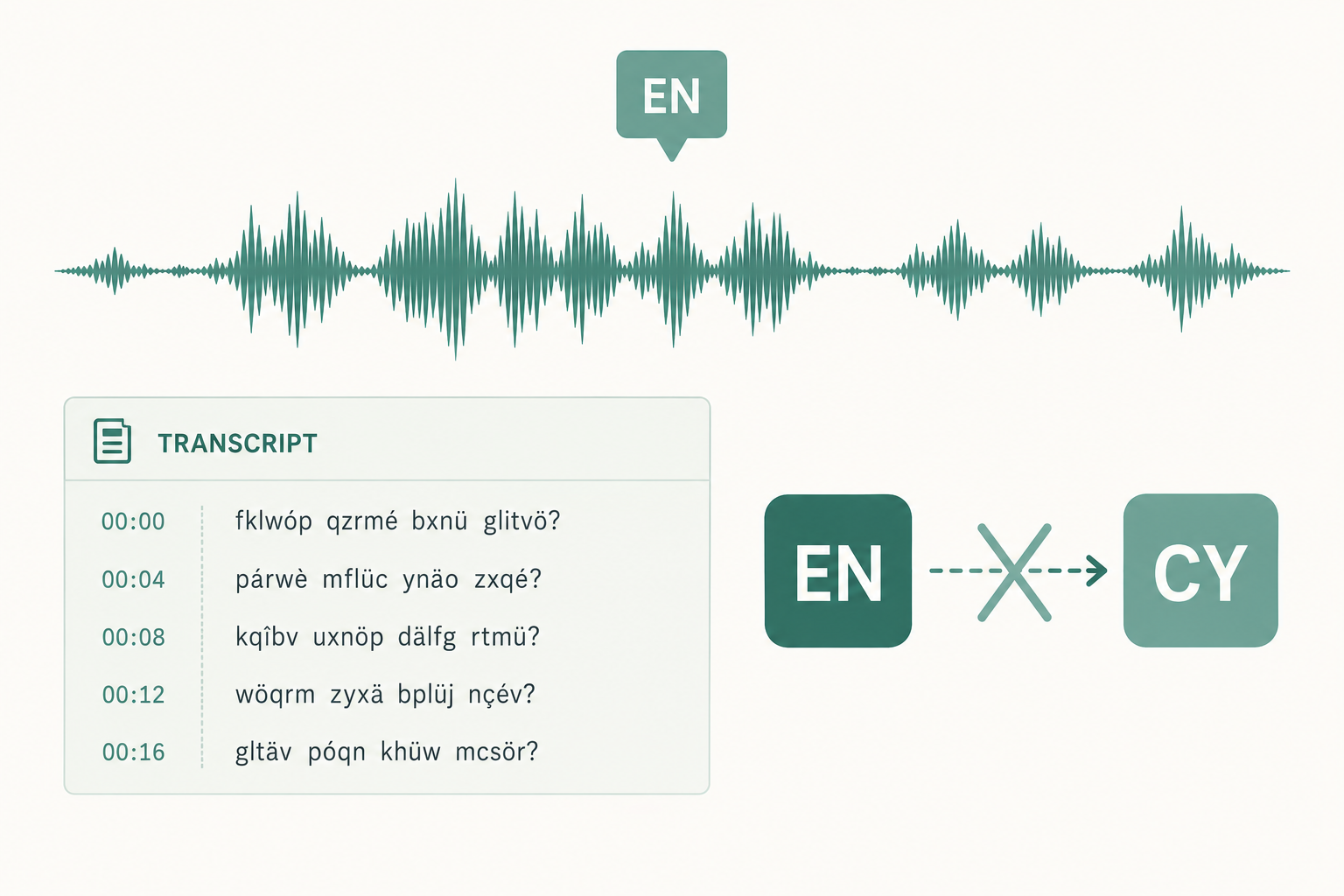
Whisper Detecting the Wrong Language? 5 Causes and Fixes
Whisper sometimes labels English audio as Welsh or guesses Spanish for an English call. Five common causes and the one-line fix that works in most cases.
How to Transcribe a City Council Meeting Recording
Most city councils post the video but not a searchable transcript. Here's how to turn a multi-hour meeting into clean, quotable text with speaker labels.
How to Transcribe a Twitch VOD Into a Text Transcript
Turn a four-hour Twitch VOD into a searchable transcript so you can find clip-worthy moments, write show notes, and add captions for a YouTube re-upload.
How to Transcribe a WhatsApp Voice Message to Text
Convert a WhatsApp voice note to text using WhatsApp's built-in transcription or by exporting the audio file. Step-by-step for iPhone and Android.
Why AI Transcripts Get Names Wrong (and How to Fix It)
AI transcripts mangle proper names because the model bets on common words. Here's why it happens, and the practical fixes that actually work in real workflows.
How to Transcribe Oral History Interviews Step by Step
Oral history interviews need speaker labels, timestamps, and a verbatim style future researchers can actually use. Here's a practical workflow.
How to Transcribe UX Research Interviews Step by Step
A practical workflow for transcribing UX research interviews: recording setup, speaker labels, clean reads vs verbatim, and coding for themes.
How to Transcribe a TikTok Video: Step-by-Step Guide
Pull a clean text transcript from any TikTok video in under a minute — including how to handle background music, multiple speakers, and SRT export.
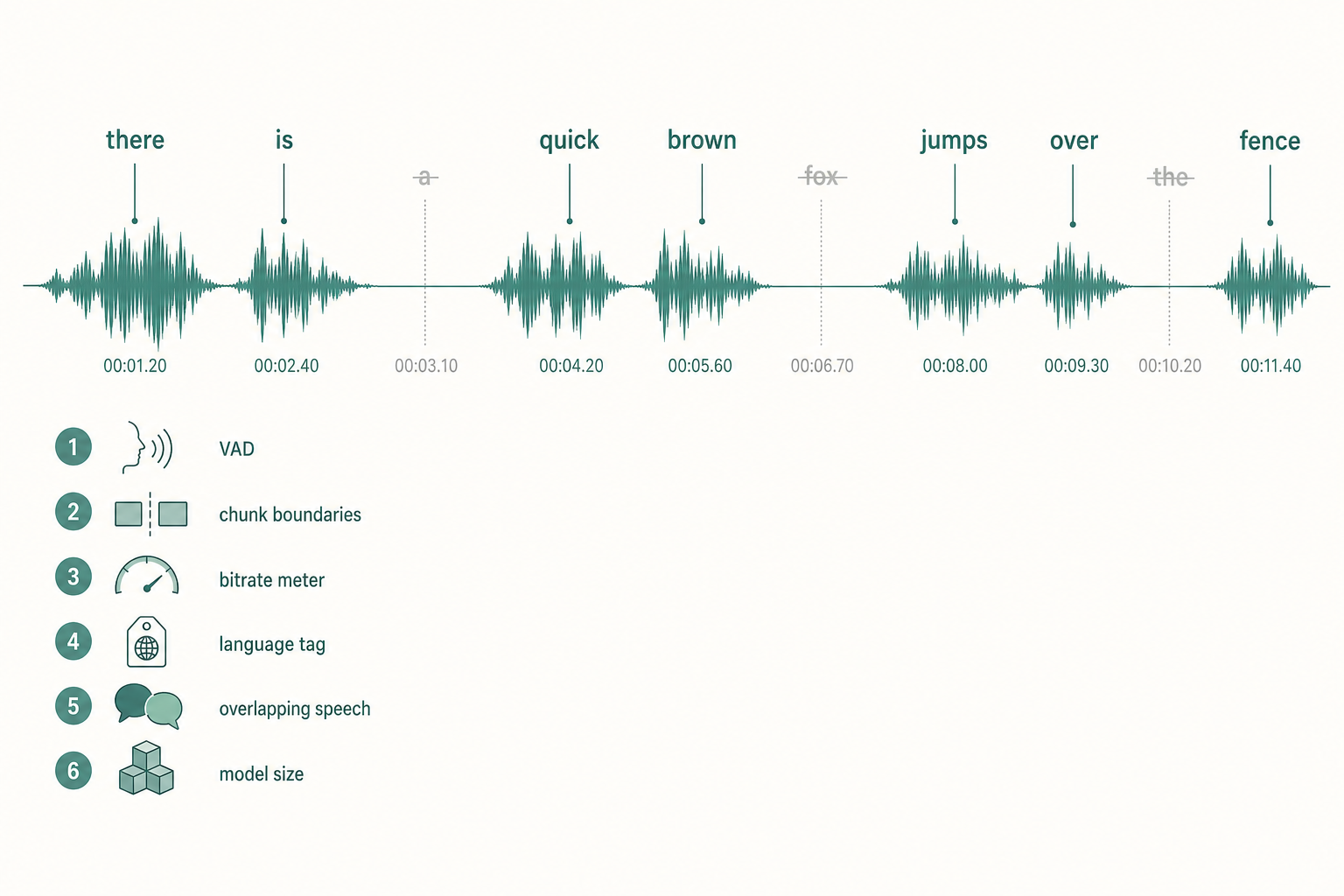
Whisper Skipping Words? 6 Causes and How to Fix Them
Whisper dropping words from your transcripts? It's almost always one of six fixable causes — VAD, chunking, bitrate, language, overlap, or model size.
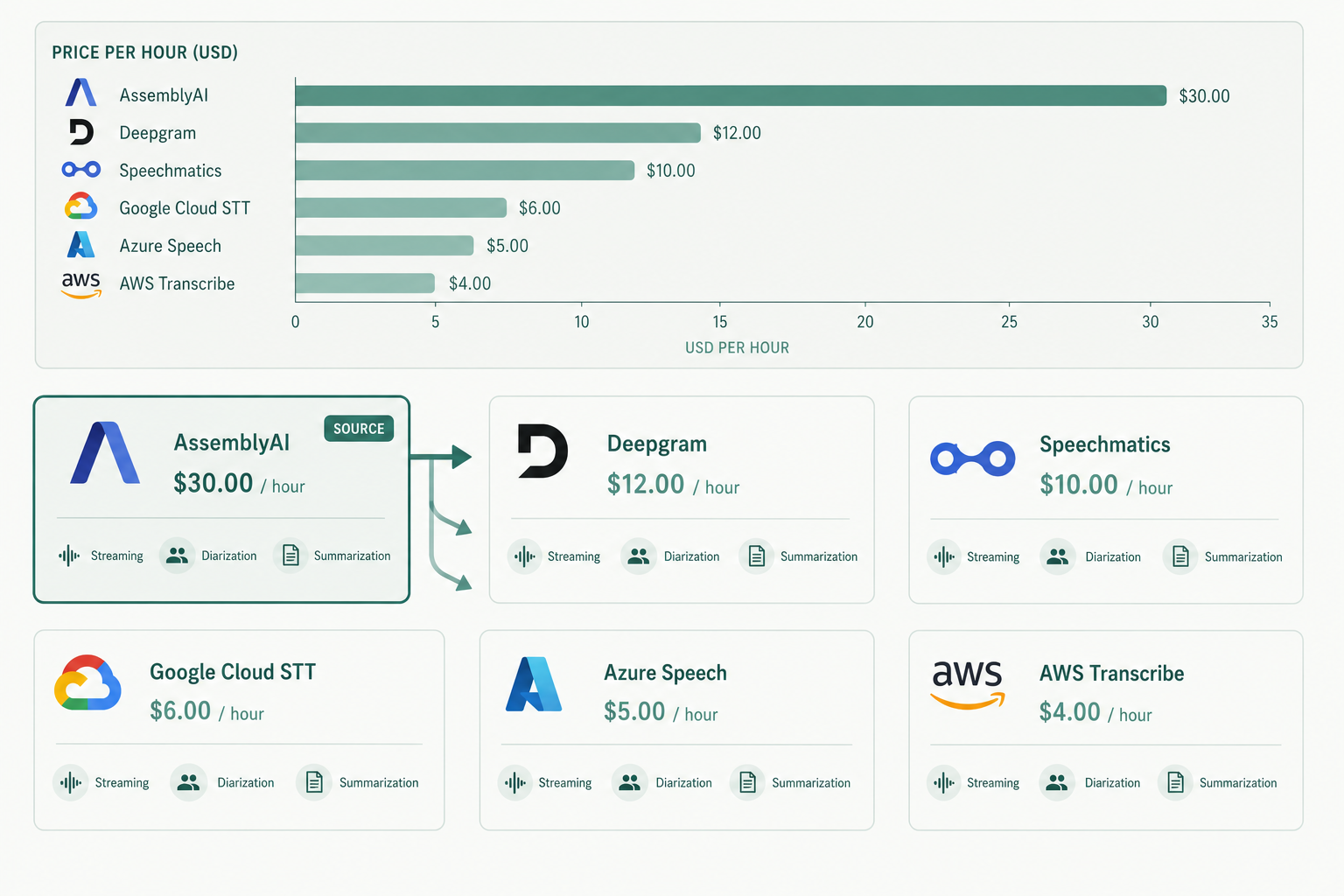
AssemblyAI Alternatives: 6 Speech-to-Text APIs Compared
AssemblyAI gets expensive at scale. Six speech-to-text APIs worth comparing in 2026: Deepgram, Rev AI, Whisper, Google Speech, Azure, and VTS.
How Do You Transcribe on ChatGPT? Step-by-Step Tutorial
ChatGPT can't transcribe audio files on its own — but with voice mode for live speech and a custom connector for YouTube and Facebook links, you can get a transcript without leaving the chat.
Connect VTS to Claude AI (Web + Desktop) — Tutorial
Hand a YouTube link to Claude and get the transcript in the same chat. Three-step custom-connector setup — same flow on Claude.ai web and Claude Desktop.
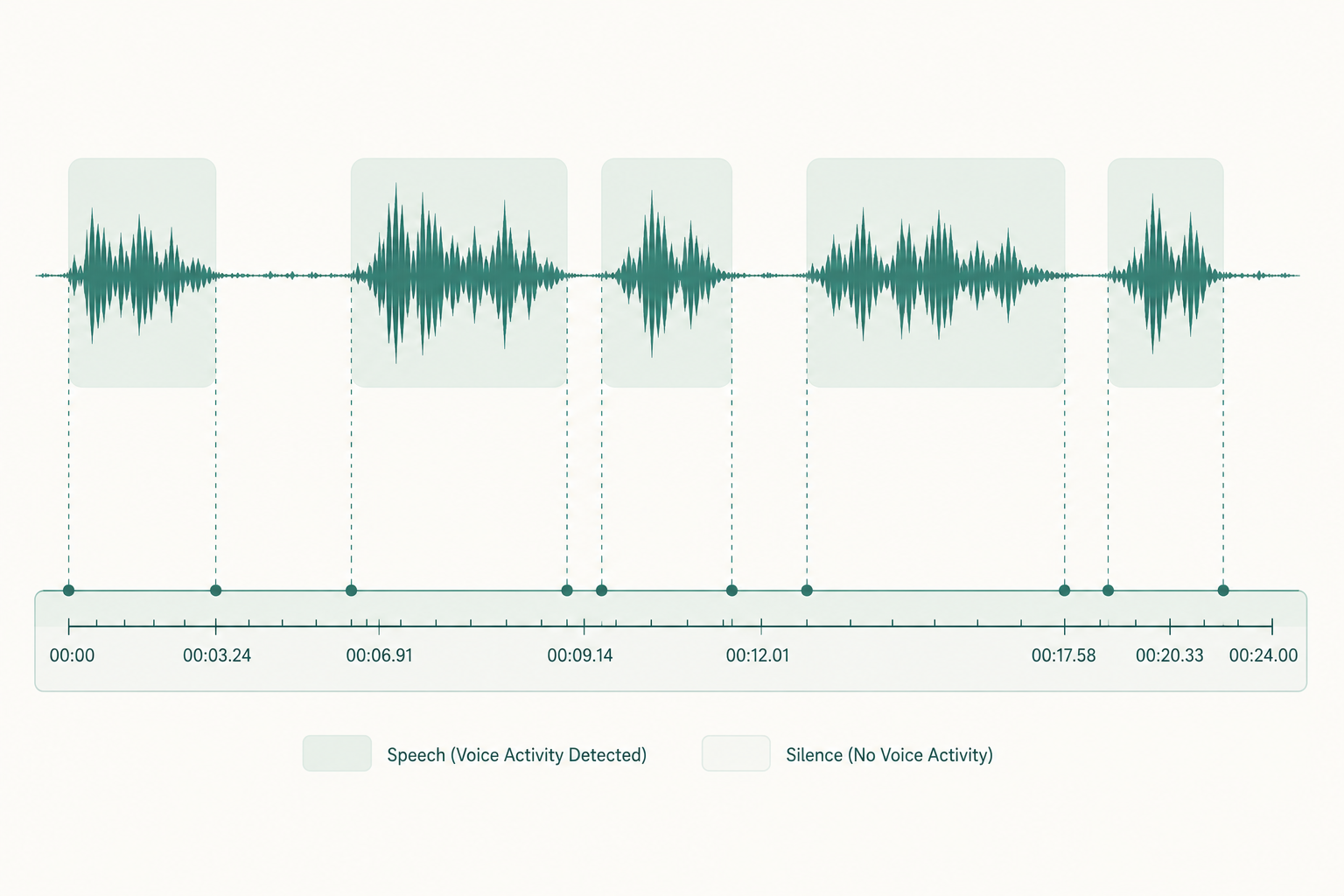
What Is Voice Activity Detection (VAD) in Transcription?
Voice activity detection finds where speech happens and skips the silence — the difference between clean transcripts and runaway hallucinations.
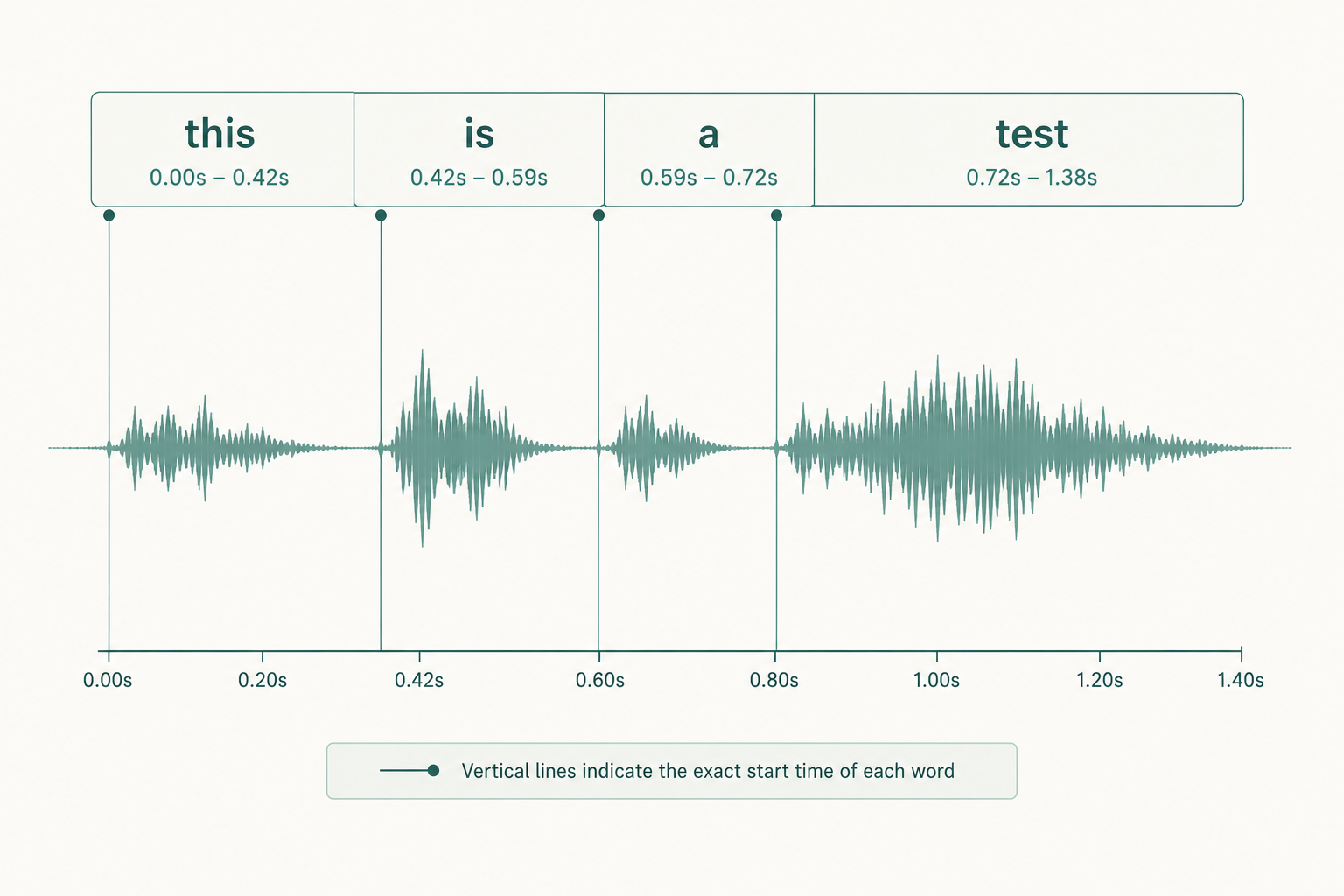
What Is Forced Alignment? Word-Level Timestamps Explained
Forced alignment matches words in a transcript to exact time positions in the audio. Here's what it does, where it breaks, and when you need it.
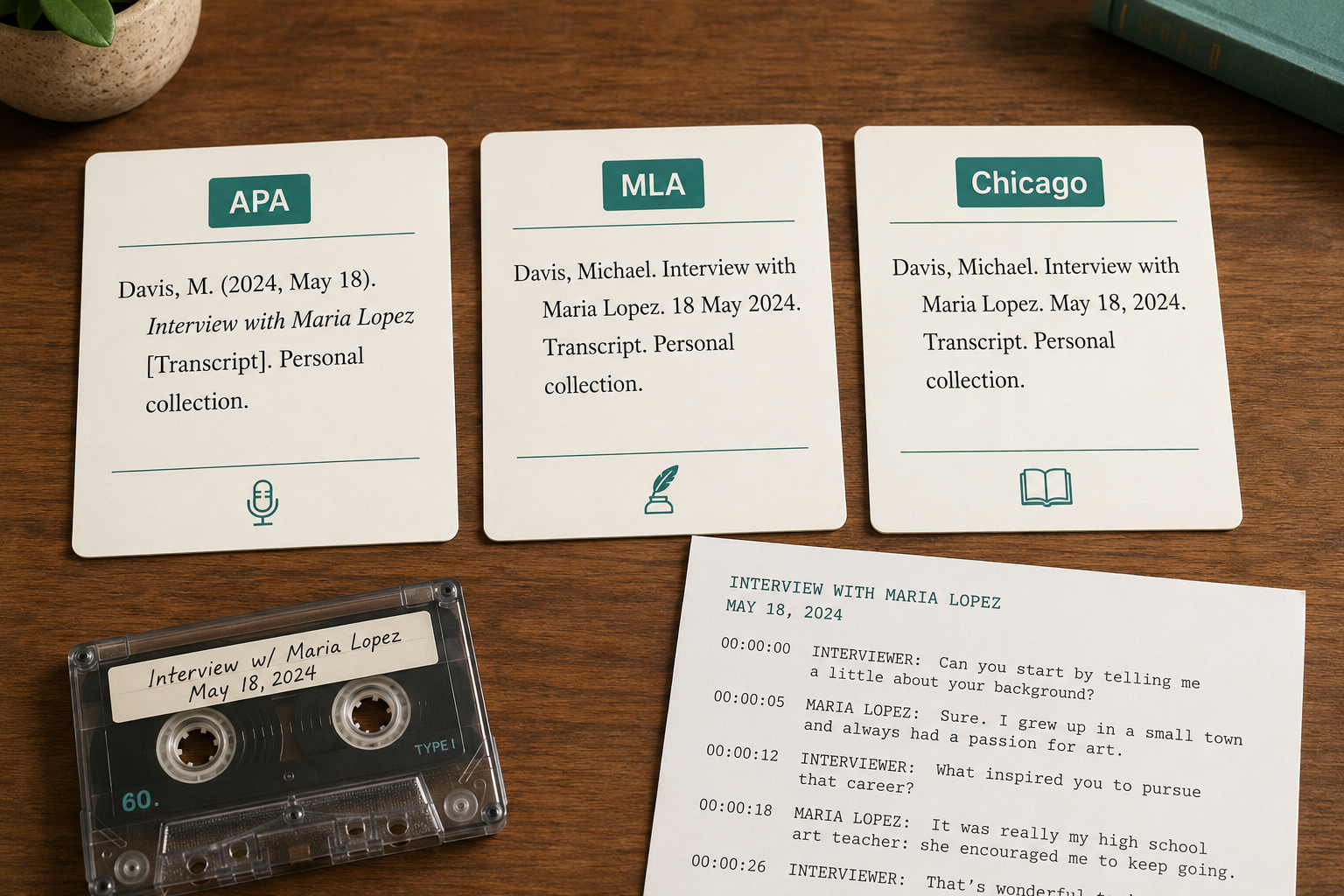
Citing Interview Transcripts in APA, MLA, and Chicago
Citing interview transcripts in APA, MLA, and Chicago: personal interview vs archived source, when to add timestamps, and where the full text belongs.
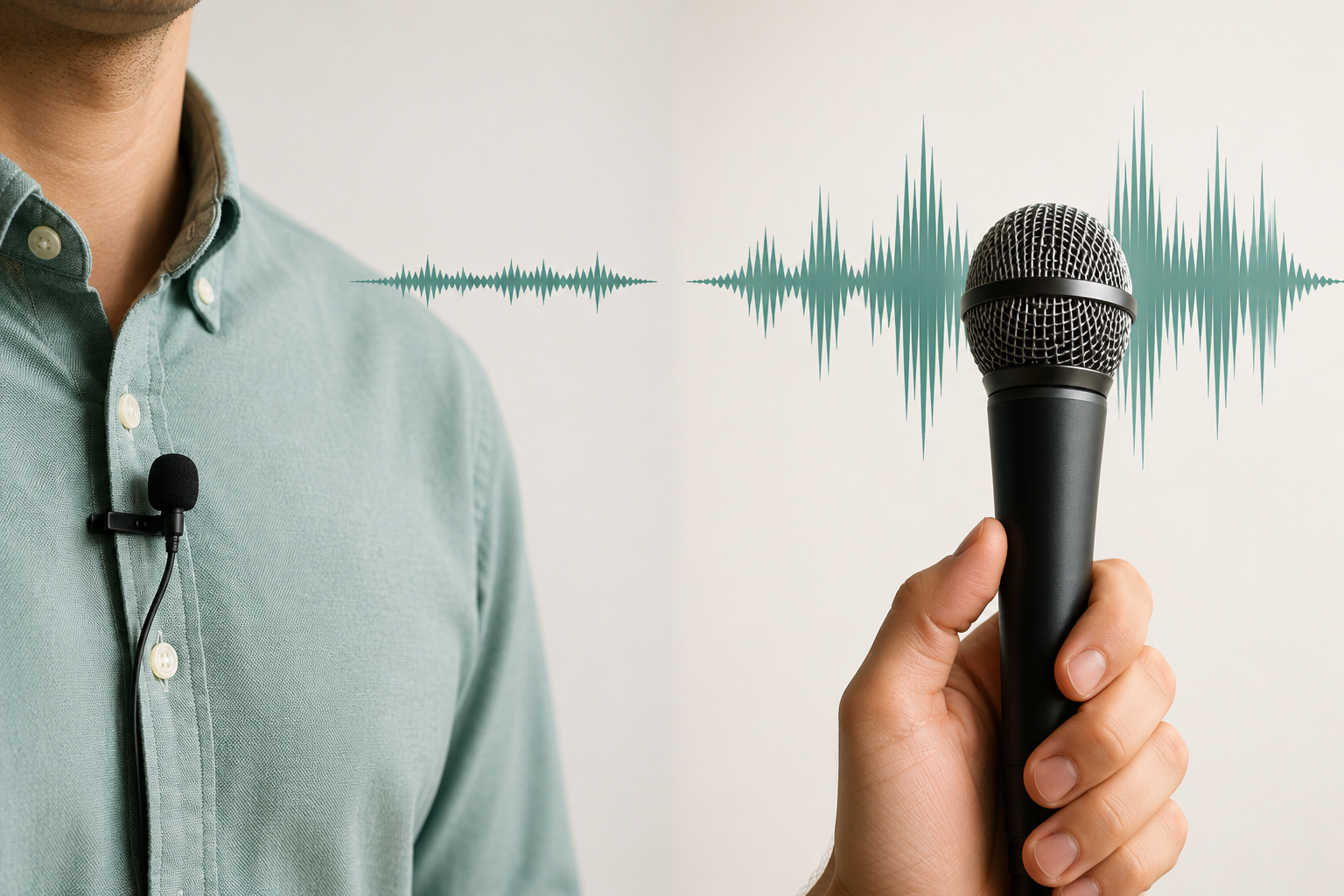
Lavalier vs Handheld Mic for Interview Transcripts
Picking between a lav and a handheld mic for an interview changes how clean your transcript comes back. Here's which one wins, and when each one loses.
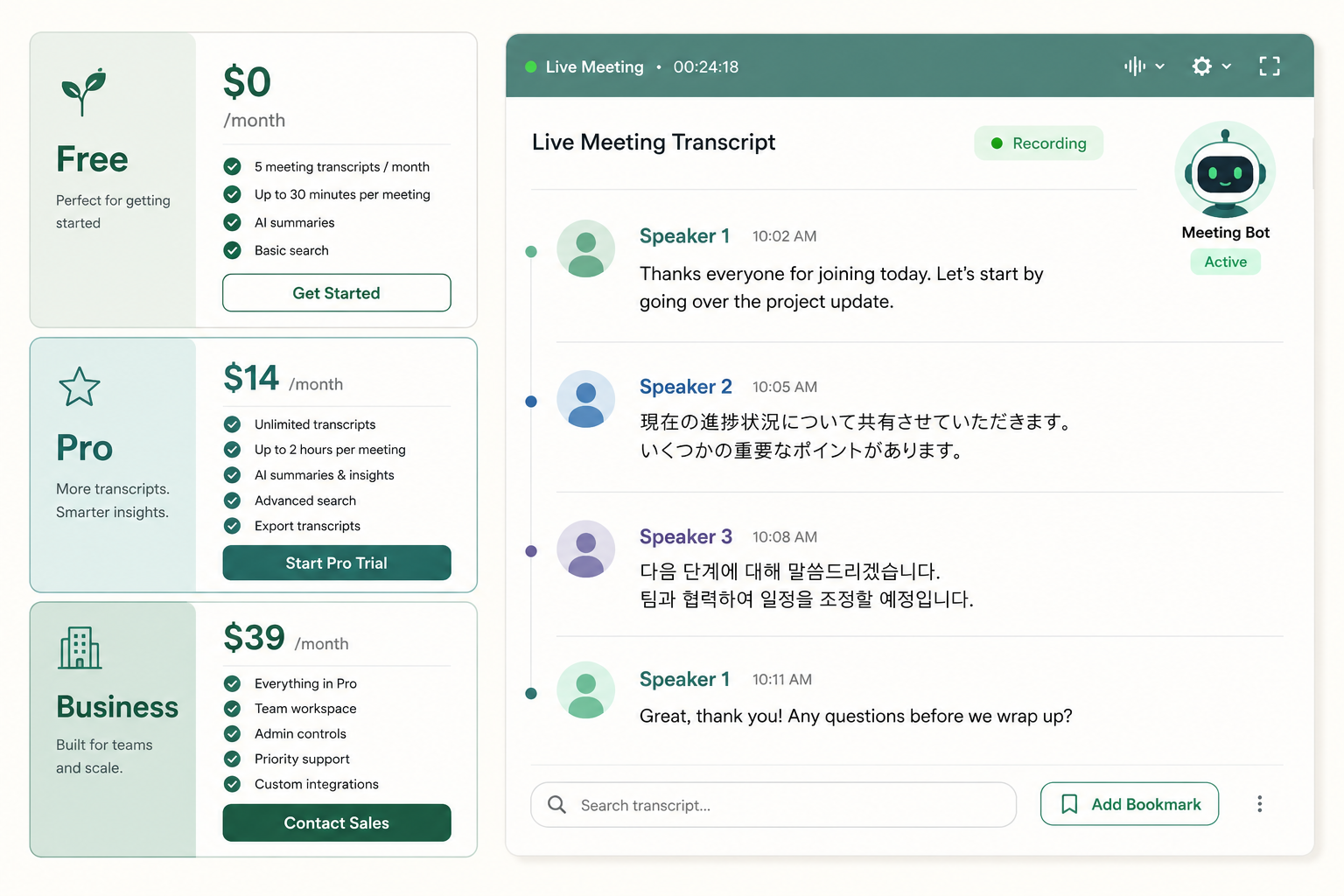
Notta Review: Pricing, Accuracy, and Limits in 2026
Notta promises fast AI transcription with a free tier and a meeting bot. We tested who it works for, where it falls short, and what it actually costs.
Free AI Transcription: What You Get and the Limits
Free AI transcription gives you about 90% accuracy on clean audio with caps on length, speakers, and exports. Here is what you actually get.
Deepgram Review: Pricing, Accuracy, and Real Limits
Deepgram is among the cheapest, fastest speech-to-text APIs on the market. We tested accuracy, pricing, diarization, and the real limits in 2026.
Verbatim vs Intelligent Transcription: How to Choose
Verbatim captures every 'um' and pause. Intelligent transcription cleans them up. Use verbatim for legal and research, intelligent for everything else.
How to Record and Transcribe Meeting Minutes for Free
A practical, no-credit-card walkthrough for recording a meeting and turning the audio into clean, searchable minutes without paying a cent.
Best AI Transcription Services in 2026: Honest Comparison
A side-by-side look at the AI transcription tools worth using in 2026 — Otter, Rev, Sonix, Descript, AssemblyAI, HappyScribe, and VTS. Pick what fits.
How to Transcribe a Loom Video Into a Text Transcript
Loom's built-in transcript handles single-speaker videos fine. For multi-speaker calls, jargon, or anything you'll paste into docs, you need more.
How to Transcribe iPhone Voice Memos: Step by Step
Export a Voice Memo from your iPhone, transcribe it in minutes, and get clean searchable text you can paste into your notes. The exact workflow.
What Is Speaker Diarization? A Plain-English Guide
Speaker diarization is the step that splits a recording into 'who spoke when'. Here's how it works in plain English, where it fails, and when you need it.
How to Transcribe a Focus Group Recording Accurately
Overlapping voices, side chatter, weak room mics: focus group audio is the hardest to transcribe. Here's the workflow for clean, speaker-labeled transcripts.
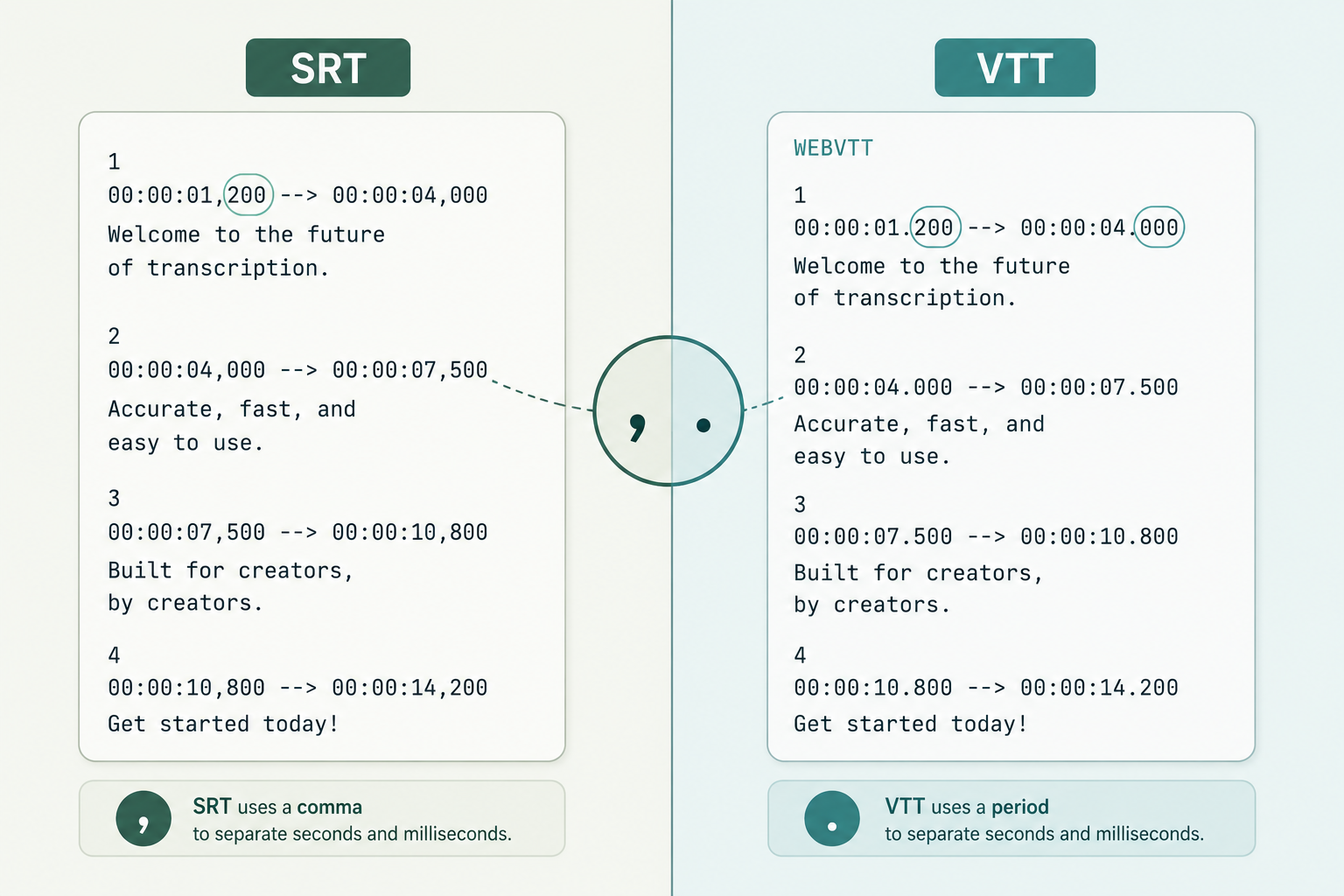
VTT vs SRT: Caption Format Comparison for Web Video
SRT works almost everywhere; VTT is the format HTML5 video and modern browsers need. Here's the real difference, and which one to pick for your video.
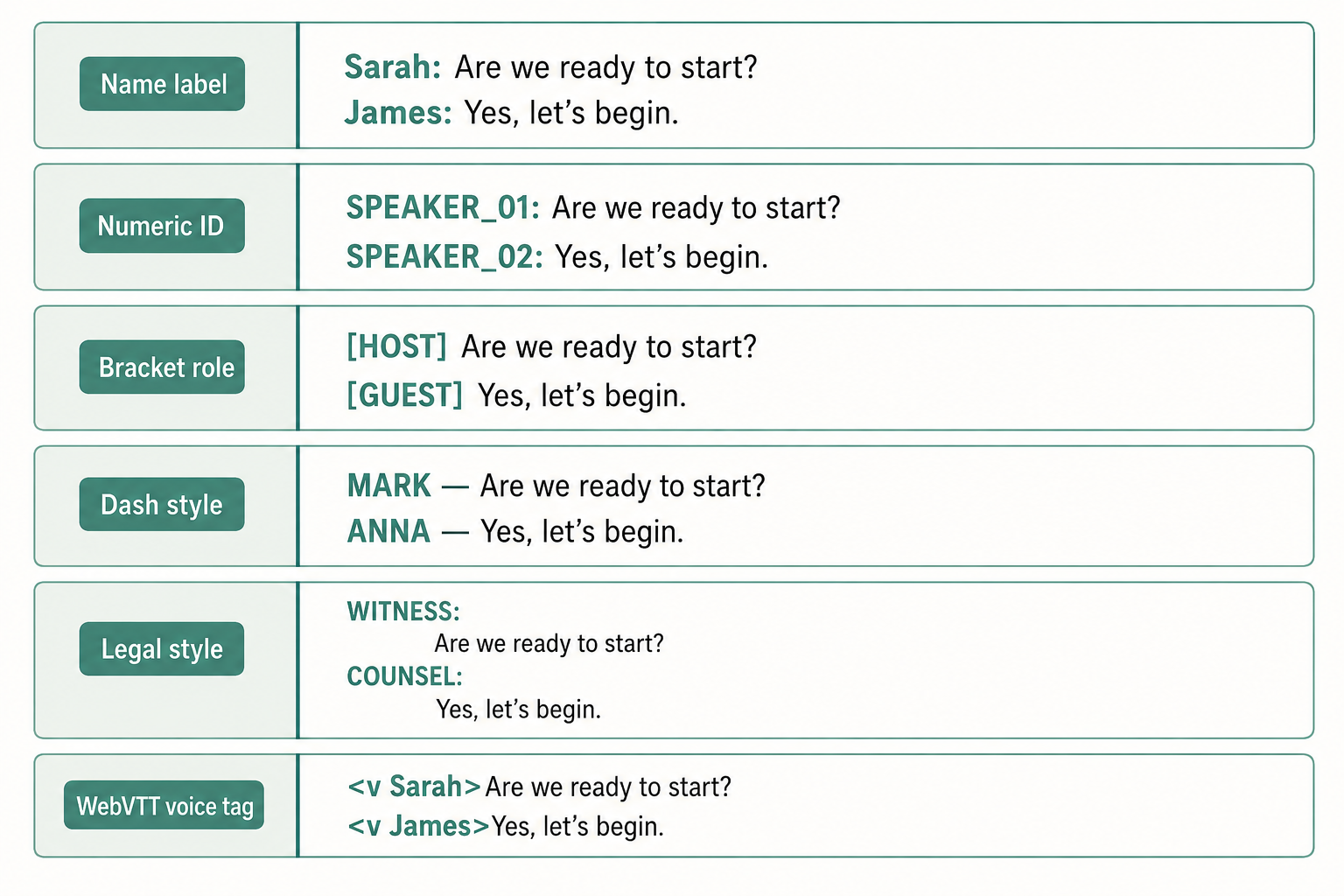
Speaker Label Format: 6 Conventions and When to Use Each
Six widely-used ways to format speaker labels in a transcript, from podcast show notes to legal records to captions, and which fits your use case.
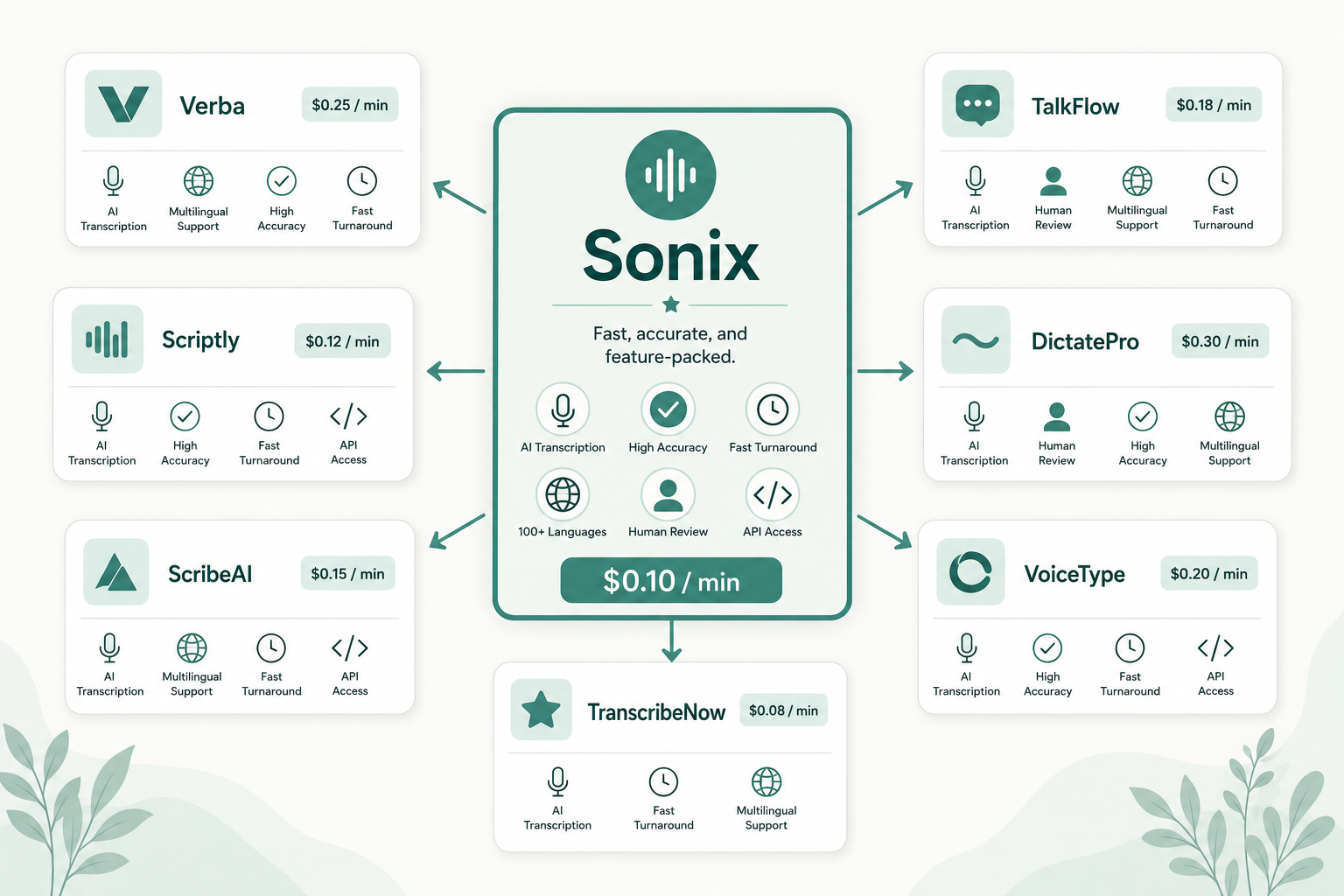
Sonix Alternatives: 7 Cheaper Transcription Tools Compared
Seven honest Sonix alternatives, mapped to real workflows — for solo work, dev APIs, human review, multilingual, and when staying still wins.
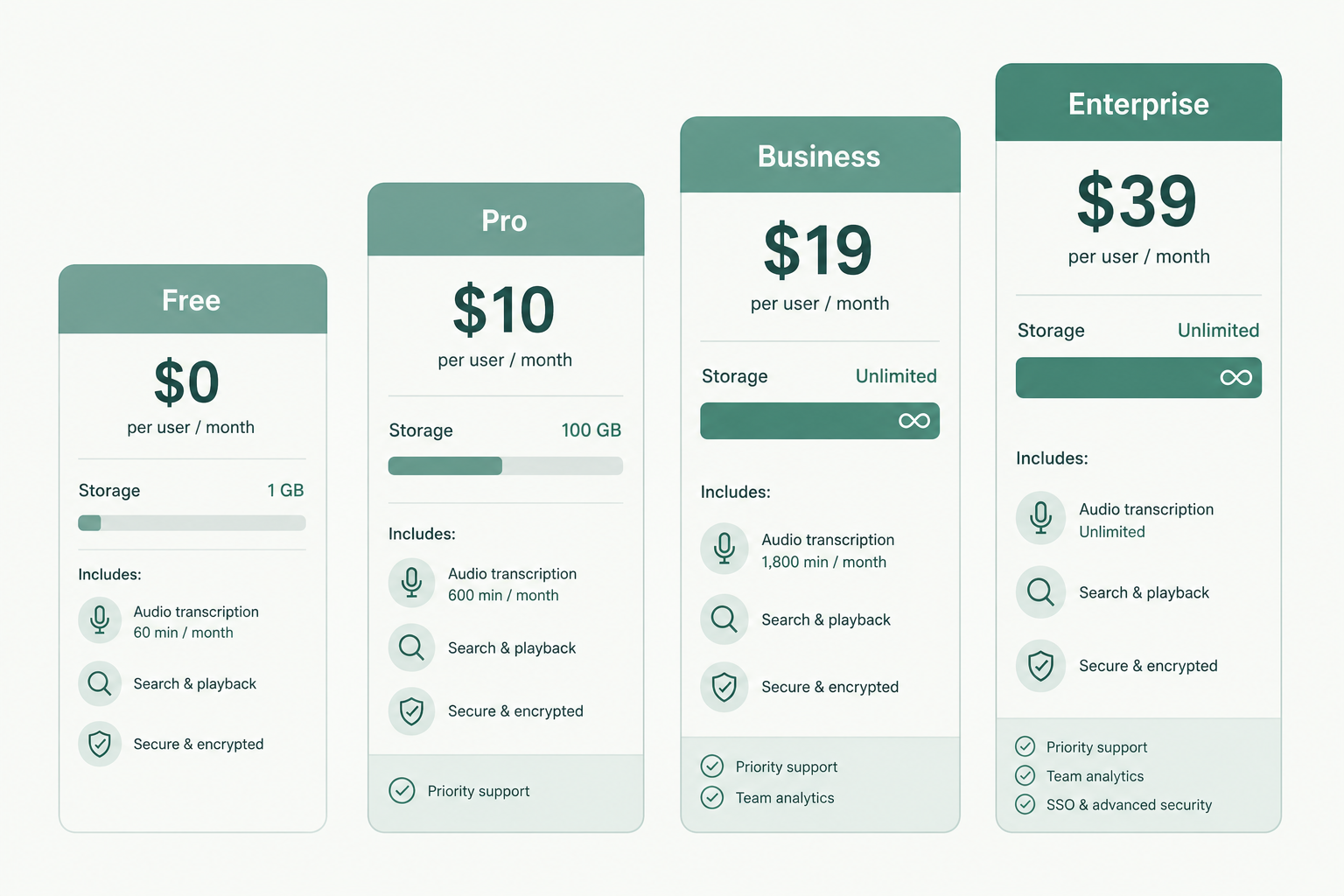
Fireflies.ai Pricing 2026: Plans, Limits, Hidden Costs
Fireflies.ai costs $0 to $39 per user/month. We break down each plan, what's actually included, the storage caps, and when it's worth the money.
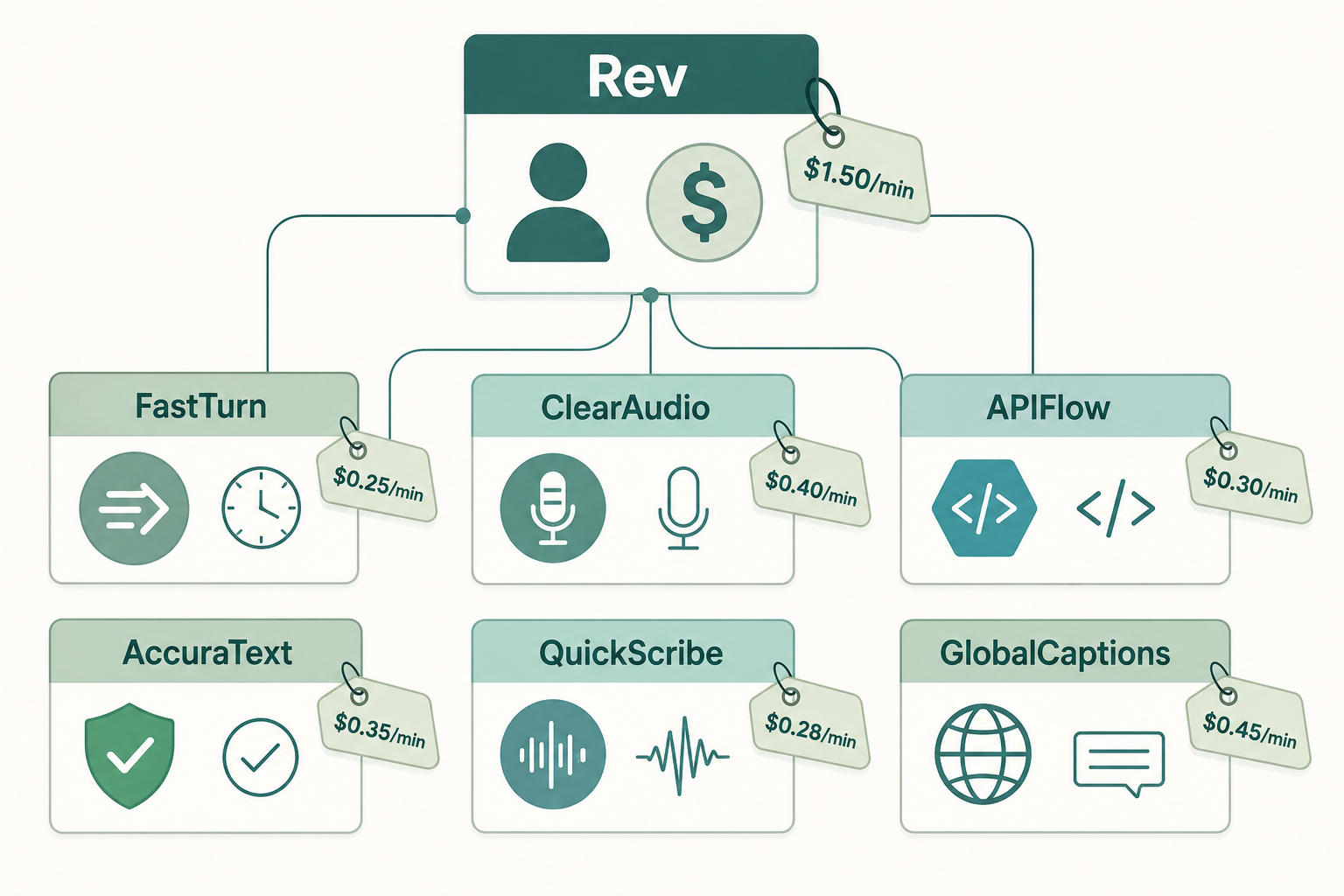
Rev.com Alternatives for Human-Quality Transcripts
Rev's pricing has crept up while AI caught up. A fair look at 6 Rev.com alternatives, what each one actually wins, and which fits your work.
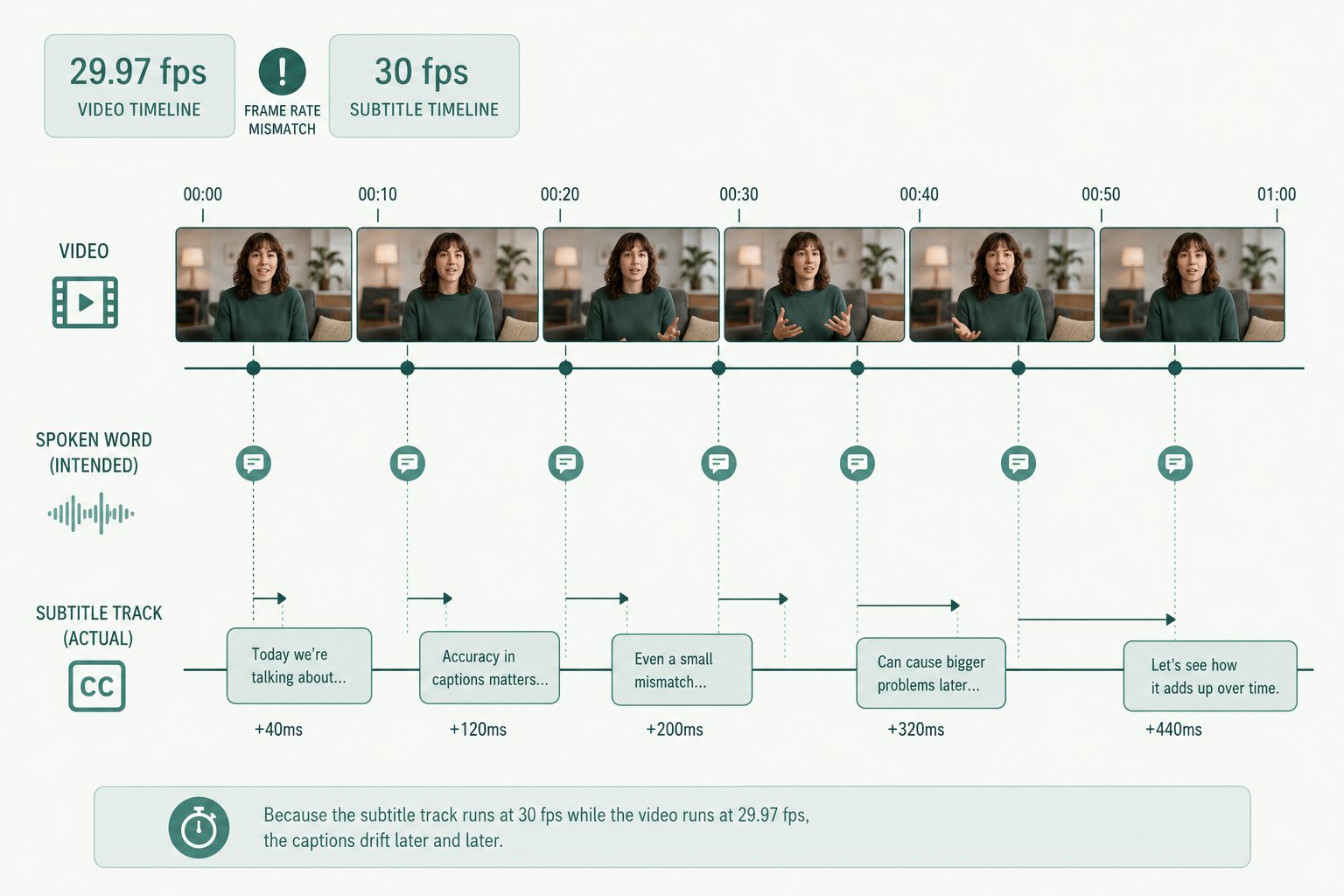
SRT Out of Sync? 6 Fixes for Subtitle Timing Drift
Subtitles drifting later in your video? The fix is almost always one of six causes — here's how to spot which one, then correct the timing fast.
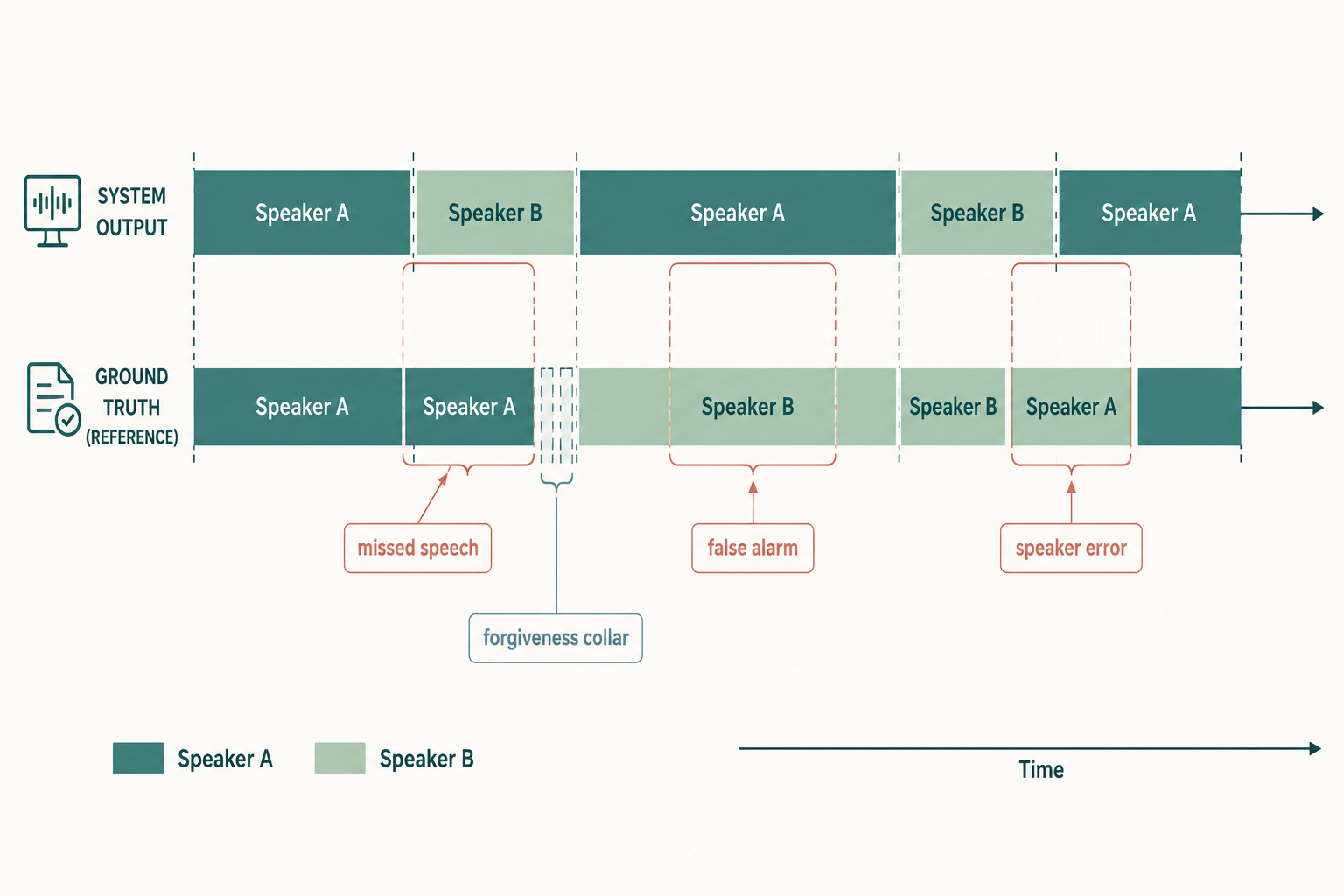
What Is Diarization Error Rate (DER)? Speaker ID Accuracy
Diarization error rate is how systems are scored on who-said-what. Here's what DER measures, what's a good score, and how to lower yours.
Otter.ai Pricing: Is There a Cheaper Alternative?
Otter.ai runs from free to $30/user a month. Whether pay-as-you-go is cheaper comes down to how many hours you transcribe. Here's the break-even.
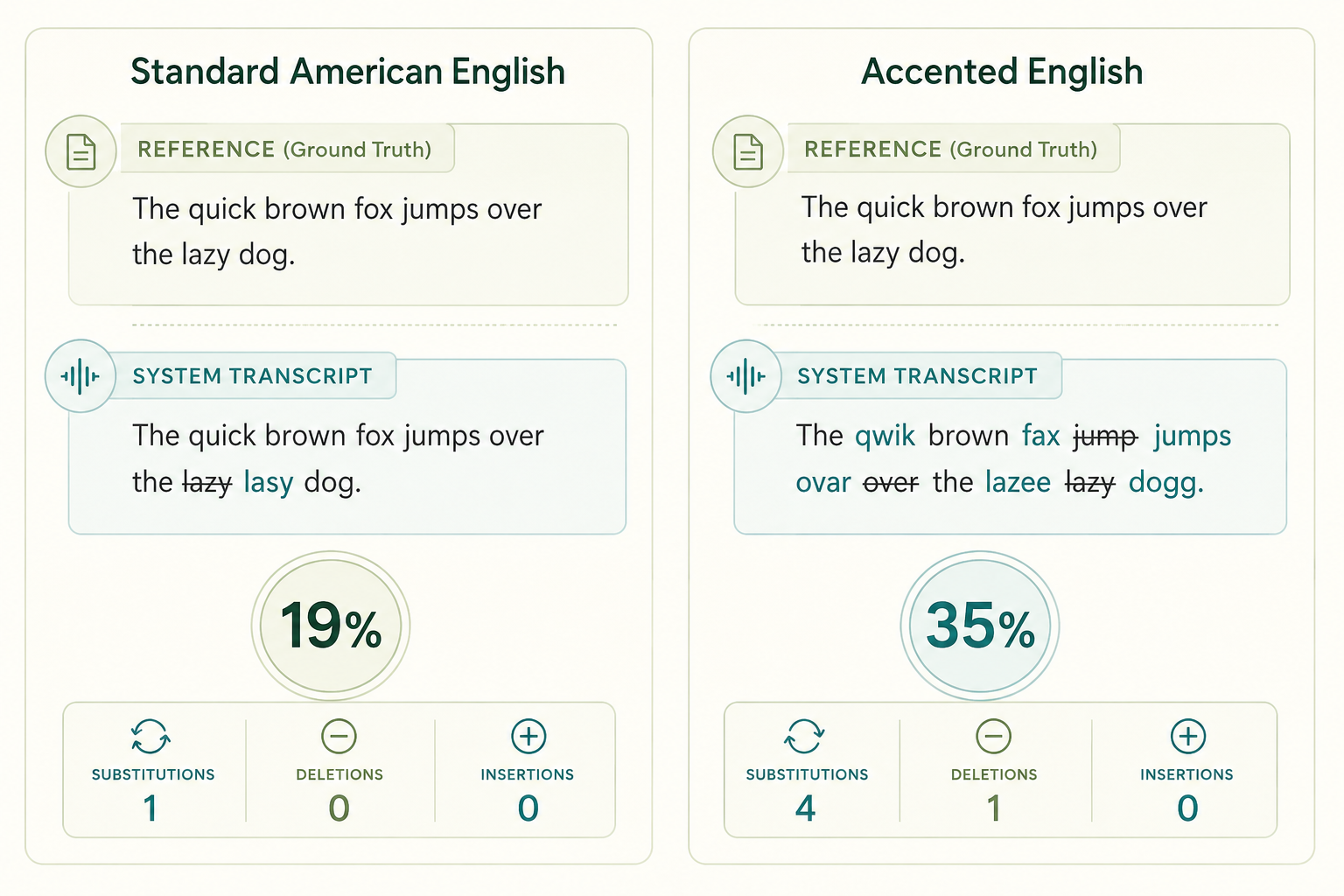
How Accurate Is AI Transcription for Accented English?
AI speech-to-text is 10–20 points less accurate on accented English. The numbers, the published studies, and what actually fixes the gap in practice.
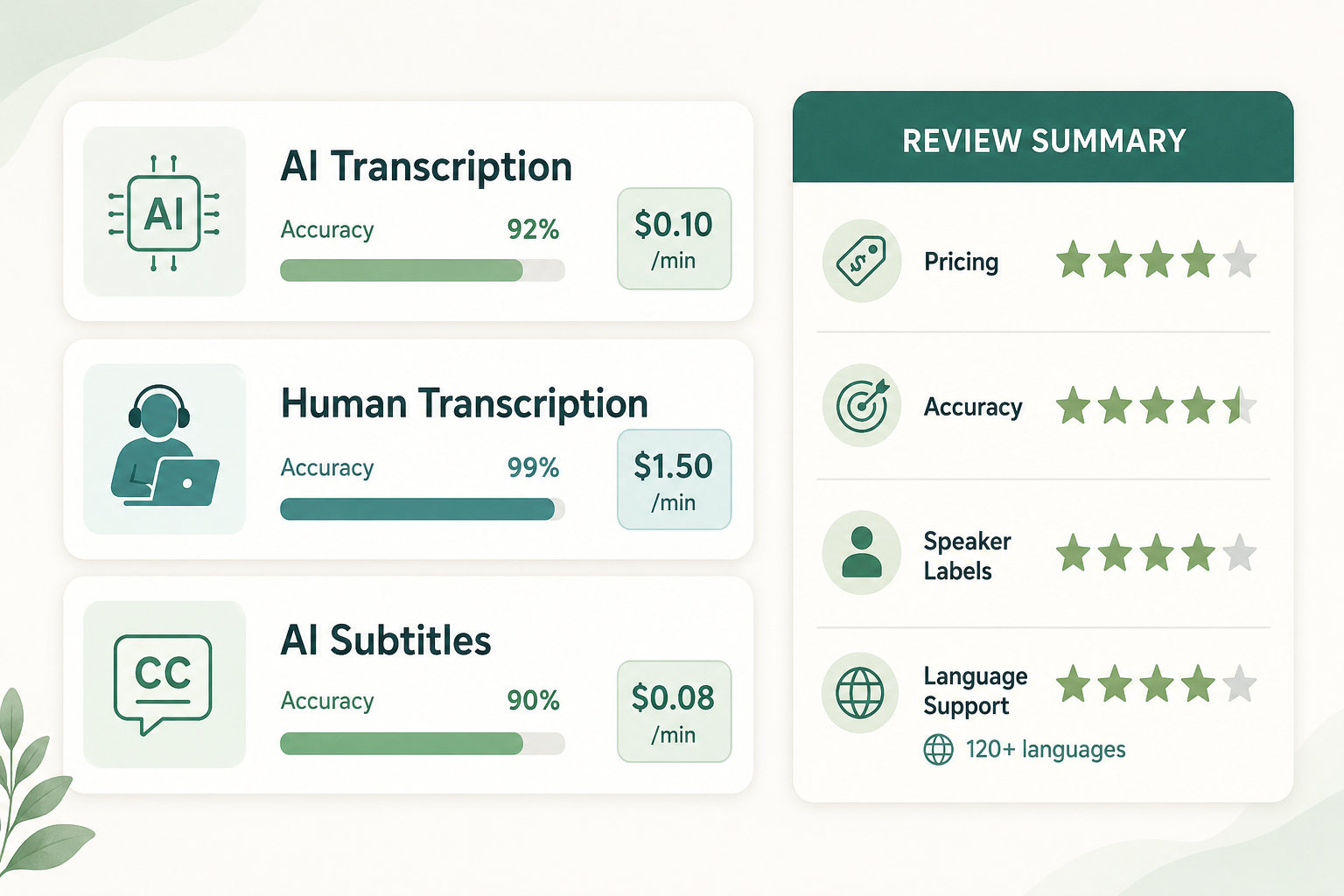
Happy Scribe Review: Pricing, Accuracy, and Limits
Honest Happy Scribe review covering pricing, accuracy, speaker labels, language support, and where it falls short, plus when to pick something else.
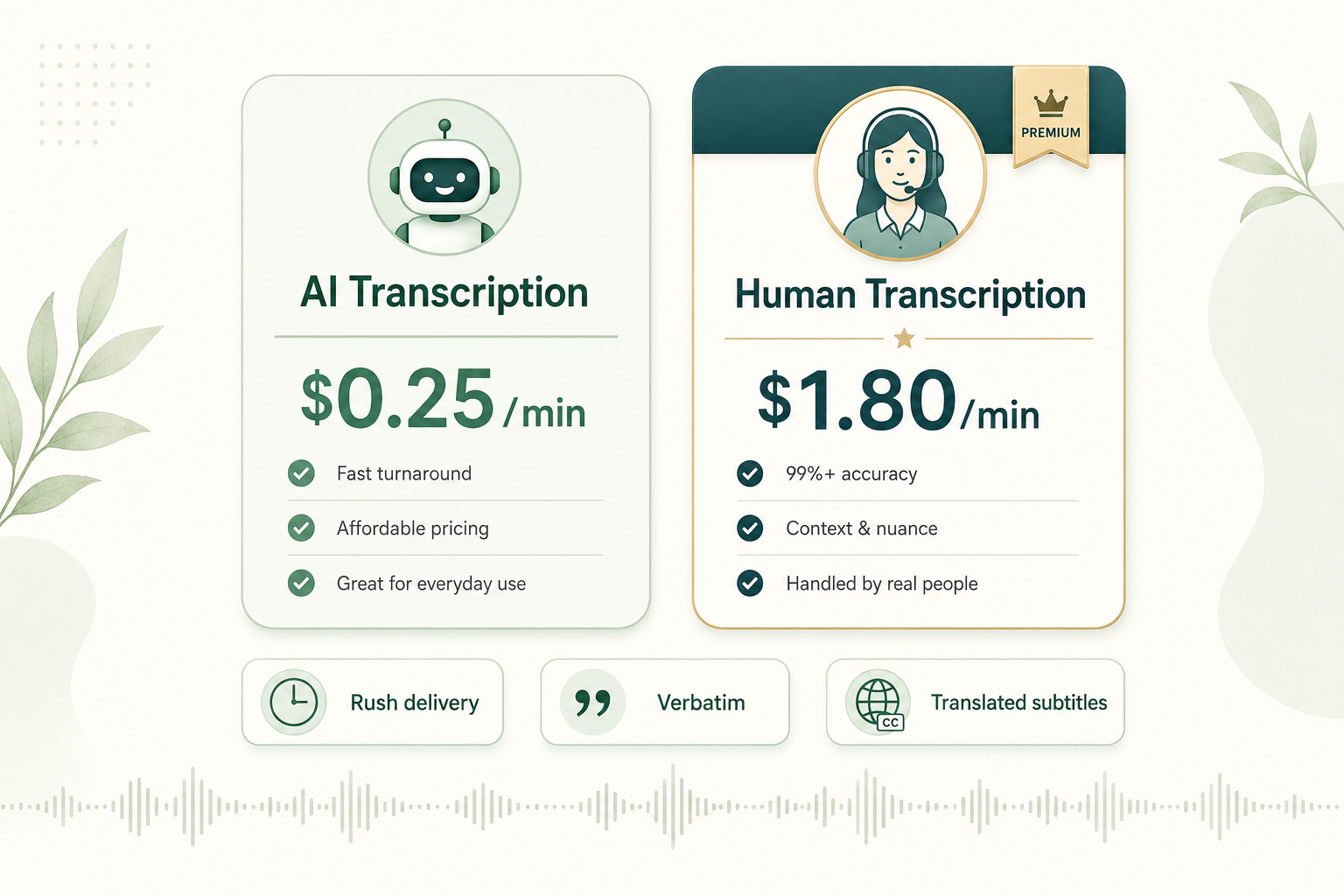
Rev.com Pricing in 2026: Plans, Per-Minute Rates, Add-Ons
Rev.com charges $0.25/min for AI and $1.99/min for human transcription. Here's what's included, what's not, and when an alternative saves you money.
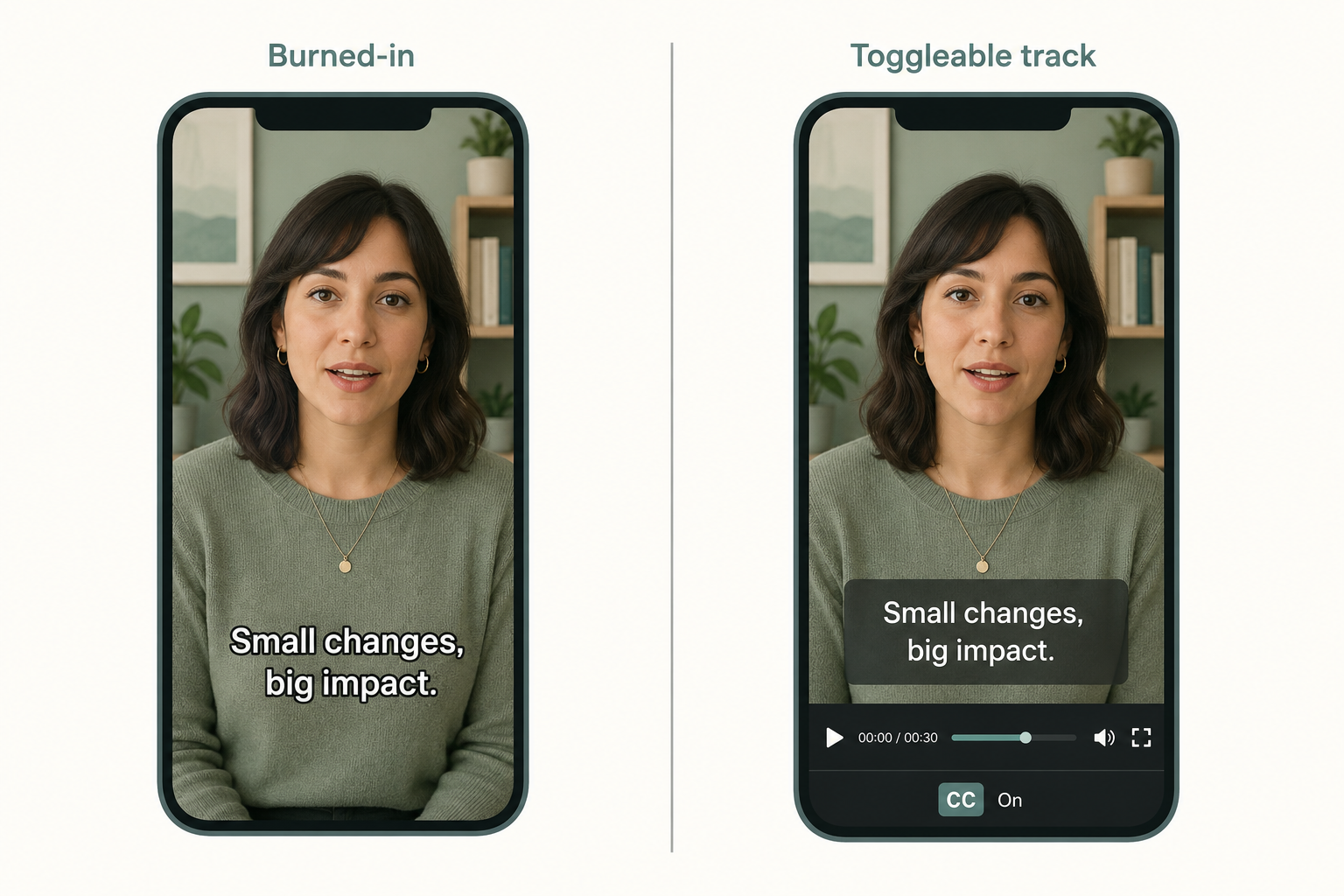
Open Captions vs Closed Captions: When to Use Each
Closed captions can be toggled; open captions are burned in. The difference decides whether you pass accessibility audits or win short-form social.
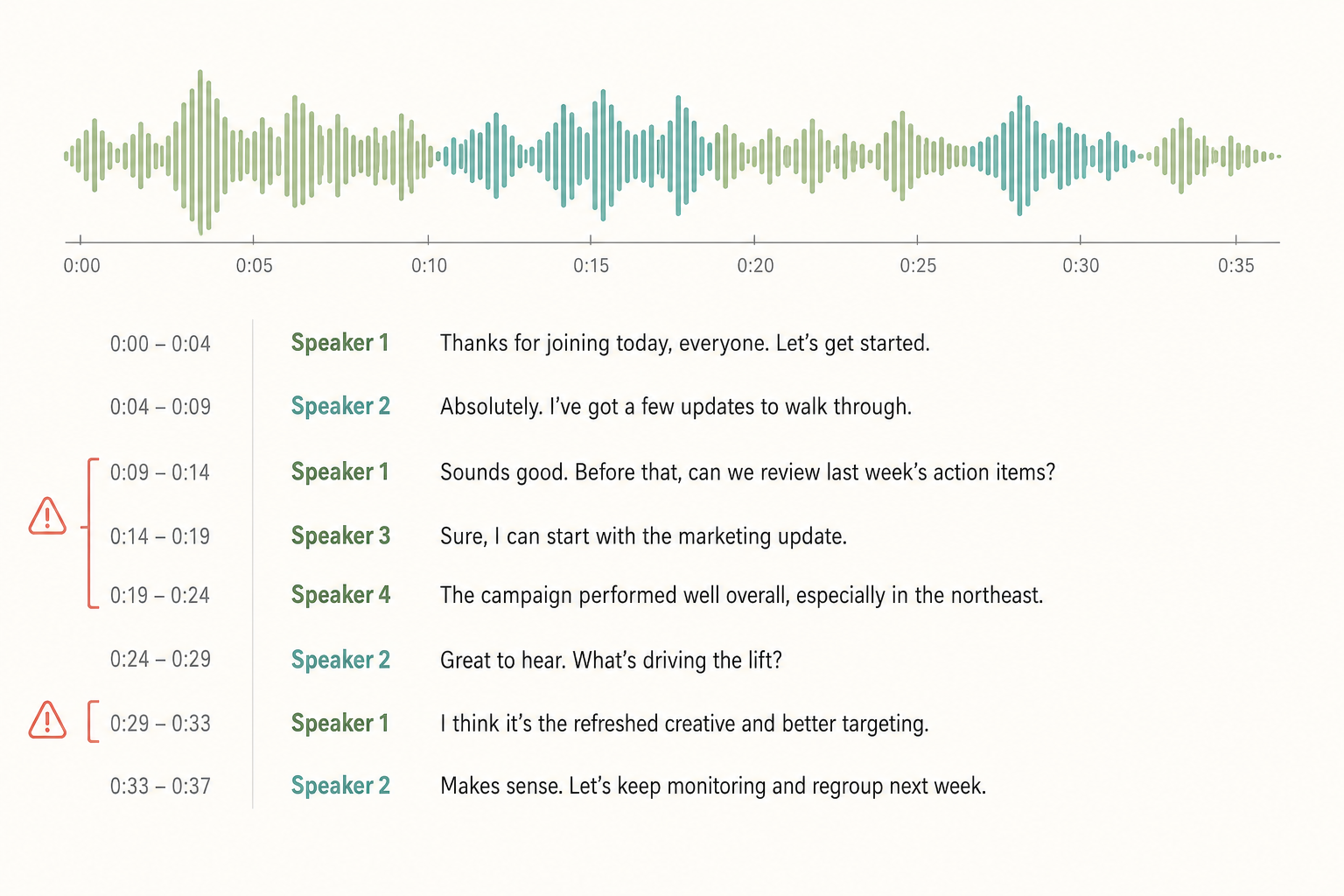
Why Your Speaker Labels Are Wrong (And How to Fix Them)
Your transcript's speaker labels are wrong? Here are the five most common causes of bad diarization, how to confirm each, and the fix for every case.
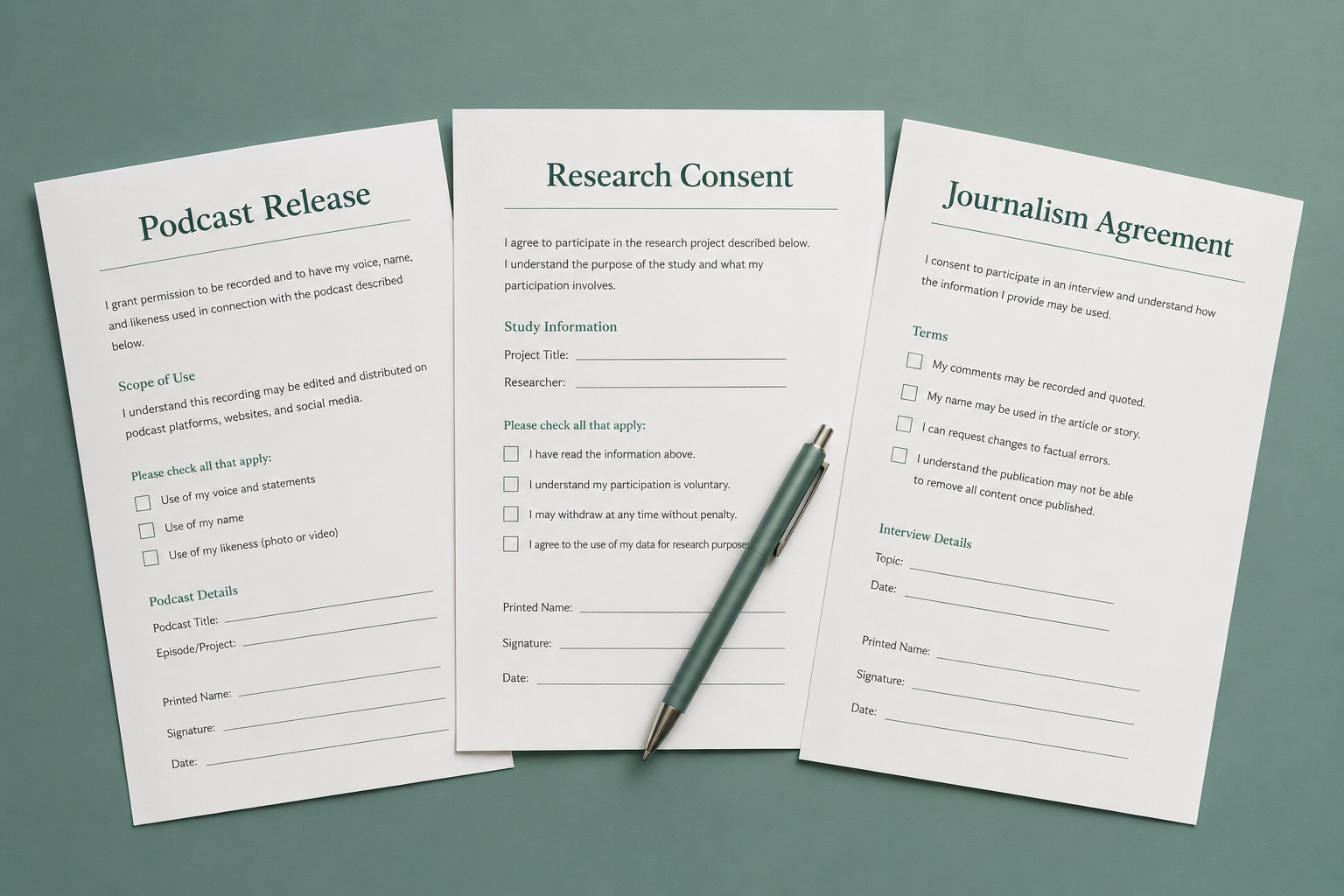
Recording Consent Forms for Interviews: 3 Templates
Copy-paste consent templates for recording interviews: podcast releases, research consent, and journalism agreements. Plus fill-in guidance for each.

Temi Review: What $0.25 a Minute Actually Gets You
Temi charges $0.25 a minute for AI transcripts. Here's what you actually get, where the accuracy stumbles, and whether to use it for your next file.
How Much Does AI Transcription Cost? The Real Numbers
AI transcription runs from $0.004 to $0.36 per minute depending on the provider, accuracy tier, and features like speaker labels or diarization.
What's the Best Audio Format for AI Transcription?
WAV, MP3, M4A: does the audio file format actually change transcription accuracy? Here's what really matters and what people overthink about audio.
How to Transcribe a Sales Call for Notes and Coaching
A practical workflow for turning sales call recordings into searchable notes, coaching clips, and CRM updates without retyping a single word.
How to Transcribe a Deposition Recording Accurately
A practical walkthrough for transcribing deposition audio or video: file prep, speaker labels, timestamps, certification, and the accuracy checks that actually matter.
How to Transcribe a Webex Meeting Recording
A practical walkthrough for turning a Webex recording into a clean, searchable transcript, with speaker labels, timestamps, and the gotchas nobody warns you about.
How to Transcribe an Interview for a Research Paper
A working method for turning recorded interviews into clean, citable transcripts you can quote in a thesis, paper, or qualitative study without losing your weekend.
How to Transcribe a Google Meet Recording (Step by Step)
Google Meet only saves recordings to Drive, not transcripts you can edit. Here's how to pull the video out and turn it into a clean, searchable transcript.
How to Transcribe a Zoom Recording with Multiple Speakers
A practical walkthrough for turning a Zoom call with three or more voices into a clean, speaker-labeled transcript without losing your evening to cleanup.
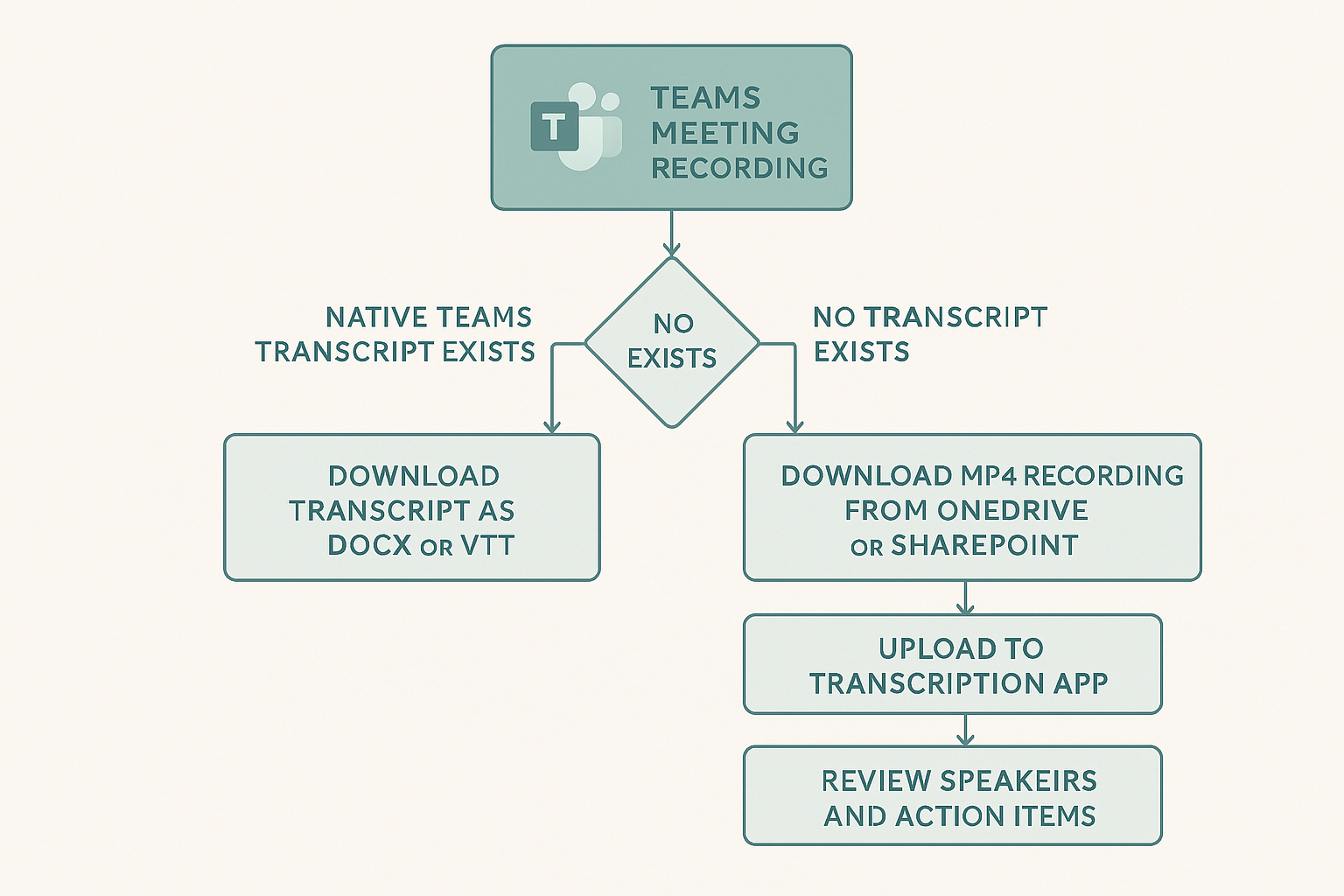
How to Transcribe a Microsoft Teams Meeting Recording
Turn a Teams recording into a usable transcript, avoid the permission traps, and know when Teams, VTS, or a .vtt export is the better workflow.
Do Subtitles Help Video SEO? What the Research Shows
Captioned videos get more views and rank for words spoken on screen. Here's the research on whether SRT subtitles really boost your video SEO.
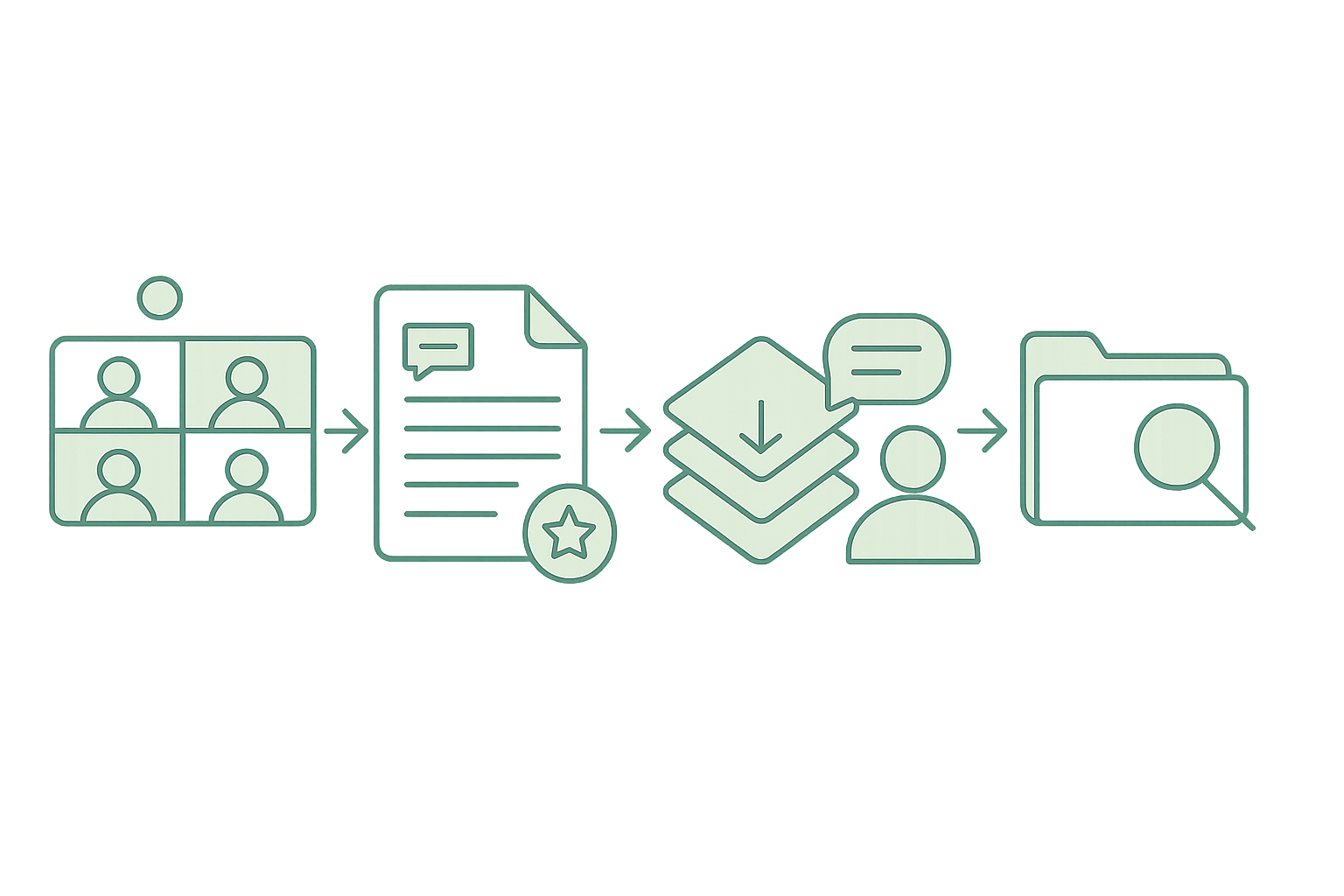
Microsoft Teams Transcription with Speaker Labels Guide
Use Teams live transcription for quick notes, then download VTT when you need timestamps, speaker labels, captions, or a cleaner meeting archive.
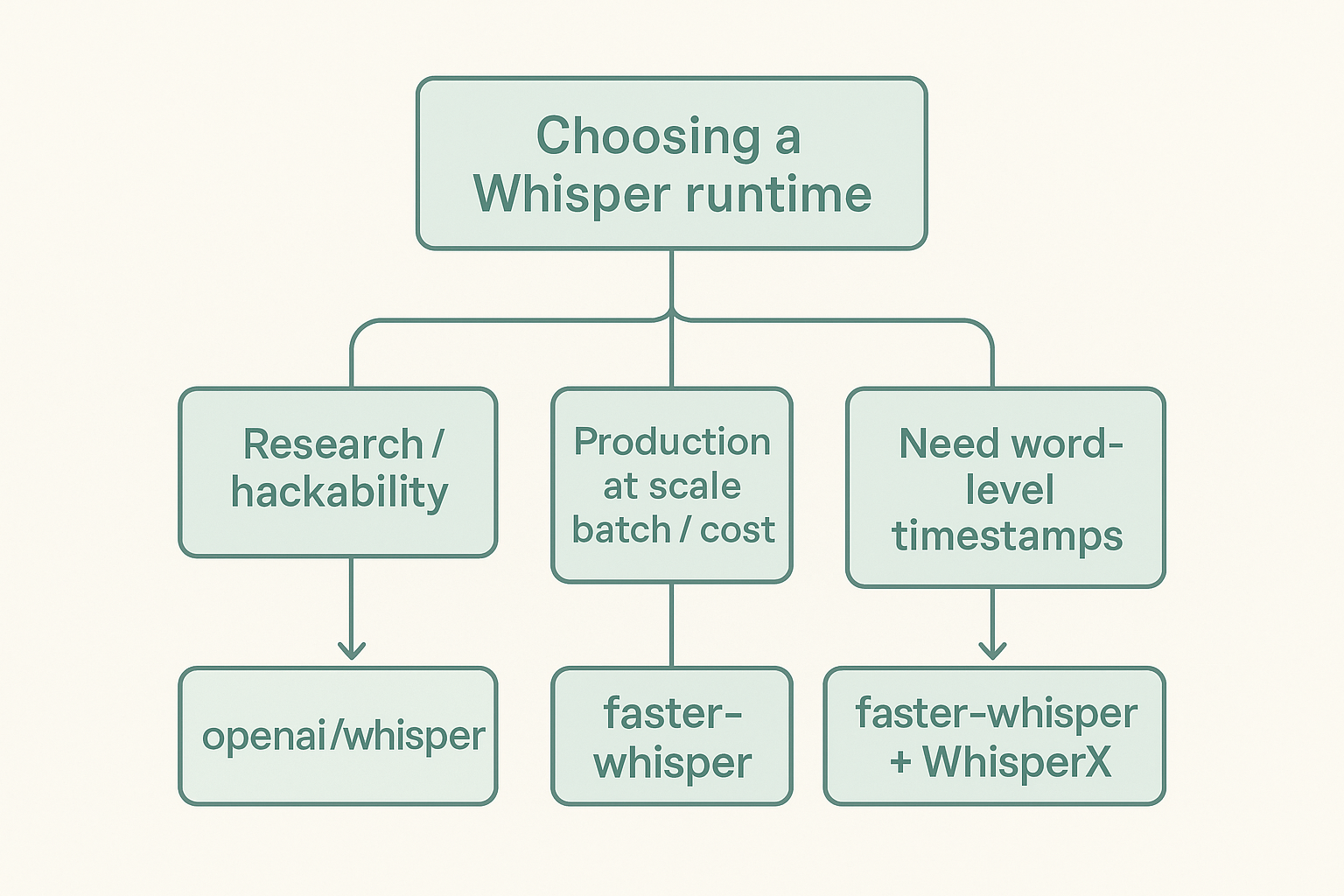
Which is better, Whisper or faster-Whisper?
Same Whisper models under the hood, two very different runtimes. Here's the honest tradeoff between OpenAI's reference implementation and the SYSTRAN reimplementation everyone uses in production.
How to Transcribe a YouTube Video in Minutes
Turn any public YouTube video into clean, readable text in just a few steps. No downloads, no complicated tools — paste a link and you're done.
SRT vs Plain Transcript: Which Should You Choose?
Both formats have their uses. Here's how to decide which output fits your workflow — and when you actually want both at once.
Why We Built VTS Without a Subscription
Most transcription tools charge you every month. We think that's the wrong model for most people — here's the thinking behind pay-as-you-go.
Transcribing Lectures: A Student's Guide
Recorded lectures are hard to review. Learn how to turn hours of audio into searchable, readable notes you can actually study from.
5 Ways Researchers Use Transcription in Their Work
From interview analysis to qualitative coding, transcription is a core part of modern research. Here's how practitioners use it day-to-day.
How to Add Subtitles to Your Videos Using SRT Files
Once you have an SRT file, adding subtitles to your video is straightforward. A step-by-step guide for the most common platforms.
Getting the Most Out of Timestamped Transcripts
Timestamped transcripts let you jump directly to any moment in the original video. Here's how to use them for editing and review.
Podcast Transcription: Getting Every Word Right
Podcast audio is notoriously tricky to transcribe. Here's how to get the most accurate results from conversation-heavy recordings.
How to Transcribe Facebook Videos
Facebook videos and reels can be transcribed just as easily as YouTube links. Here's a quick walkthrough from paste to finished text.
Using Transcripts for Content Repurposing
A single transcript can become a blog post, social copy, a newsletter, and show notes. How to build a repurposing workflow from scratch.
Transcription Accuracy: What to Expect
No transcription is 100% perfect. Here's what affects accuracy, what to watch out for, and how to review and clean up your output.
Creating Accessible Content with Subtitles
Captions aren't just for the hearing-impaired. They improve engagement, retention, and reach — especially on mobile and in loud environments.
How Journalists Use Transcription Tools
From interview recordings to press conference clips, transcription has become a core part of the modern journalism workflow.
Working with Long-Form Transcripts
Transcripts from hour-long recordings can be overwhelming. Here's how to structure, split, and navigate long-form text effectively.
Timestamped Transcripts for Video Editors
Video editors use timestamped transcripts to build rough cuts on paper before touching the timeline. A practical how-to for the workflow.
How to Speed Up Your Research with Transcription
Qualitative researchers spend hours listening and re-listening. Transcripts change that — here's how to integrate them into your process.
VTS vs Other Transcription Services: An Honest Look
There are plenty of transcription tools out there. Here's where VTS fits in — what it does well and where a subscription tool might serve you better.
Transcribing Multilingual Content
Videos with multiple languages or heavy accents require extra care. Here's how to approach multilingual transcription and what to watch out for.
Best Practices for Audio Quality Before Transcribing
Good audio is the single biggest factor in transcription accuracy. Simple steps you can take before recording to get cleaner results.
No posts match your search. Try a different keyword or category.